With five days to go until Osun votes on August 15, the governorship race has narrowed to a contest of records versus promises, and of three very different visions for what the state should become. The ARISE News Town Hall on August 11 laid it bare: this is no longer about party slogans. It is about who can credibly claim to have delivered, who can convince voters they can fix what is broken, and who can offer a genuine alternative in a state tired of the same cycles.
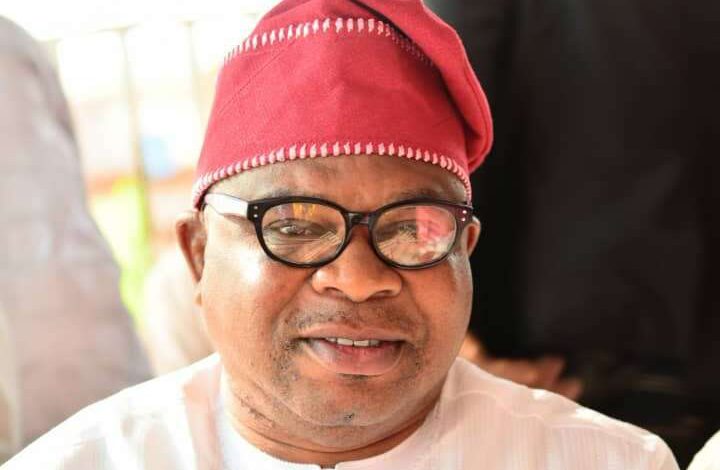
Incumbent Governor Ademola Adeleke of the Accord Party came to defend a scorecard built on concrete and clinics. He pointed to what he called unprecedented road dualization, new flyovers and streetlights as proof that infrastructure has moved from promise to pavement. In health, he cited the renovation and equipping of more than 200 primary healthcare centers with solar power and hospital beds — an attempt to push care closer to the grassroots. On education, he leaned on data: Osun now ranks 7th nationally in NECO, and his administration, he argued, is determined to climb higher. Security was framed as both presence and process, with over 1,500 trained Amotekun operatives deployed across LGAs and regular security meetings to manage electoral tension. But the defense was not only about achievements. Adeleke used the stage to air grievances, accusing opponents of deploying “federal might” to freeze state accounts and arrest his supporters — a narrative clearly aimed at casting himself as the embattled defender of Osun’s autonomy.
Munirudeen Bola Oyebamiji, “AMBO” of the APC, offered the technocrat’s counter. He did not trade flyover for flyover. Instead he went after the books. Positioning himself as a financial expert, AMBO made economic stabilization the centerpiece: correcting deficits, building a sustainable fiscal structure, and moving the state from consumption to production. His pitch was deliberately grassroots — a production-driven agenda, human-capital development at the local level, and pre-election health and infrastructure outreach as evidence that the APC understands welfare beyond campaign season. The message was clear: if Adeleke built things, AMBO will make sure the state can afford to keep them running.
Dr. Najeem Salaam, “Nojeem” of the ADC, sought to disrupt both. He presented himself as the outsider with a blueprint, not a brand. His argument rested on structural reform: cutting the cost of governance, strengthening legal and institutional frameworks, and shifting the economy toward agriculture powered by technology and innovation. Where Adeleke sells delivery and AMBO sells discipline, Salaam sells redesign — a bet that Osun’s problems are not just about money or projects, but about how government itself works.
The Town Hall revealed the fault lines that will decide this election. Adeleke is running on visibility — roads you can drive, lights you can see, clinics you can enter. AMBO is running on viability — can the state balance its books and grow its own revenue? Salaam is running on viability of a different kind — can institutions be re-engineered to deliver more with less?
Underneath it all is trust. Adeleke must convince voters that the momentum in infrastructure and health is not just election-season optics. AMBO must convince them that austerity and reform will not come at the expense of the poor. Salaam must convince them that an alternative party can actually govern in a two-party dominant state.
Five days out, Osun faces a choice between continuity, correction, and conversion. It is a battle of titans not because the personalities are outsized, but because the stakes are. The next governor will inherit a state with visible projects, deep fiscal pressure, and high expectations for security and jobs. Whoever wins will have to do more than campaign. They will have to govern with the courage to be honest about what can be done, what must be fixed, and what cannot be faked.
On August 15, voters will decide which of those three paths they believe Osun can afford.