
Makinde’s Legacy: When Power Corrupts, Controversy Rules
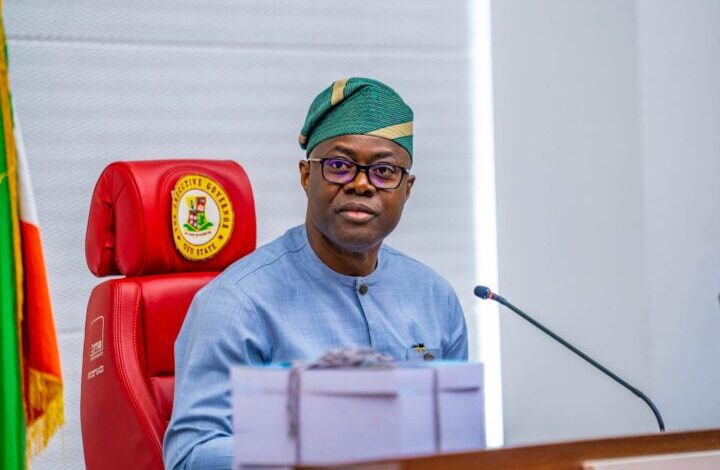
Seyi Makinde entered Agodi House in 2019 as the technocrat with a human face — a governor who paid salaries on the 25th, rescued LAUTECH, and promised a politics without bitterness. Seven years later, that face is harder to read. The empathy that defined his rise now competes with a string of heated controversies that have recast his tenure as a test of Lord Acton’s oldest warning: power corrupts, and absolute power corrupts absolutely. For every road commissioned and debt cleared, there is an allegation of demolition, defiance, or dismissal. In Oyo today, Makinde’s legacy is being written in two inks. One lists projects. The other lists protests. And increasingly, the second ink is louder.
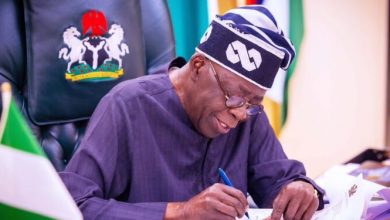
The rupture began with temerity. When Makinde publicly challenged President Bola Tinubu on policy, federal allocations, and Southwest party structure, Abuja read it as more than dissent. For a governor whose 2019 and 2023 victories were midwifed by alignments tied to Tinubu’s old ACN machinery, the act was branded ingratitude. The tag stuck because it echoed his first-term fallout. The coalition that delivered him was dismantled once power was secured. Former allies say they were “used and dumped.” Grassroots financiers were sidelined. Deputy Governor Rauf Olaniyan was impeached after defecting to APC. Critics call it the first evidence that power in Oyo was becoming personalized. When love and fear compete in politics, Makinde chose to be feared in Abuja. But fear without gratitude creates enemies with receipts.
The 2018 Music House rebuild earned praise and suspicion: selective compassion for a popular ally while other victims of “urban renewal” got none. That suspicion hardened with demolitions of properties linked to opposition figures in Dugbe and Bodija. Government cites the Urban and Physical Planning law. The allegation is that the bulldozer knows party membership. Last week, that pattern escalated. Surii’s multimillion-naira house was demolished with what critics call a total absence of constitutionality, rule of law, and due process — leveled in the same manner as houses of suspected kidnappers. No court order was publicly displayed. No statutory notice period was confirmed. The optics were immediate: punishment before trial, demolition as deterrence. In a state where the governor’s allies insist on legalism for opponents, the Surii demolition is being framed as proof of selective justice. When the state can erase private property overnight, the line between security action and political vendetta vanishes. Power, the charge goes, is no longer bound by procedure. It is procedure.
Makinde’s 110km Ibadan Circular Road was sold as legacy infrastructure to decongest the city and unlock new economic corridors, but it has become a flashpoint for disputed land and displaced lives. Communities in Egbeda, Oluyole, and Ona-Ara accuse the government of altering approved corridors, forcing evictions without adequate notice, and paying compensation that is either delayed, undervalued, or non-existent. While the state cites engineering realignments and the public-interest clause in the Land Use Act, critics frame it as land grabbing dressed as development — a project where bulldozers move faster than dialogue and paperwork. The deeper allegation is political: that consent was sought from contractors, not from citizens, and that resistance is met with bureaucracy instead of redress. In a tenure already dogged by demolition politics, the Circular Road now symbolizes the core charge against Makinde’s rule: development without due process, and power that builds for the people without building with them.
Federal intervention funds under NG-CARES brought up to N50bn to Oyo in 2023. The administration said it was reimbursement for LAUTECH, roads, and hospitals already delivered. Opponents demanded line-by-line accounts and alleged opaqueness in how billions were retired. The issue is not just money. It is a tendency. Absolute power resents the scrutiny that transparency demands. In governance, delayed disclosure is read as concealment. Once fiscal trust cracks, every new contract is presumed guilty before it is signed.
The most explosive claims now come from broadcaster and 2027 aspirant Oriyomi Hamzat. He alleges plots to plant hard drugs in Agidigbo FM to frame him, jail him, and demolish his station. He says he was summoned to Panti over links to Surii, the same Surii whose house was just demolished. His counter-allegation is graver: that prisoners were once released to vote and returned to cells afterward. He points to Auxiliary, Owo Baba Rilly, as precedent — “brought out of prison for political use and returned after.” None of this is proven in court. Yet politically, the accusation alone tests Acton’s warning at its extreme. It alleges state institutions bent for power retention.
Makinde’s record has columns: LAUTECH rescued, N97bn debt cleared without new borrowing, agribusiness investments that rebranded Oyo’s economy. But legacies are graded on two scripts: what was built and how. If the “how” is remembered as centralized, opaque, and transactional — marked by selective demolitions, contested funds, discarded allies, disputed compensation, alleged electoral manipulation, and now demolitions without due process — then power has corrupted the story. He rose on love. Machiavelli warned that love is a chain men break when sacrifice is required. The pivot to fear is now visible. Dissent is priced. Loyalty is policed.
In the end, an airport that cannot fly is a problem. A road citizens will not walk is a tragedy. Makinde’s legacy will answer one question: did the people feel they were built with, or built over? When power corrupts, controversy rules. And in Oyo, controversy is ruling the narrative.