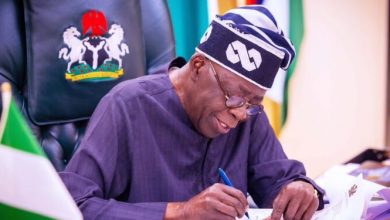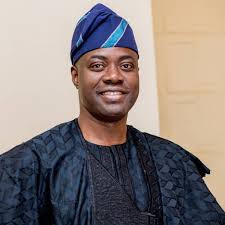


The political drama playing out between Iyiola Omisore and Gboyega Oyetola is not new. It is a rerun, and like most reruns in Nigerian politics, the script is written by fear, not by vision. The cancellation of primaries, the last-minute imposition of preferred candidates, the broken promises of power rotation, and the elevation of loyalty over capacity all point to one recurring disease: godfatherism. When political godfathers decide who can run and who must wait, the casualties are not just individuals. The casualties are due process, public trust, and ultimately development itself.
Omisore’s experience mirrors a pattern that began in 1999. By the accounts circulating, he financed the Alliance for Democracy at a critical moment and organized for primaries with the legitimate expectation that internal democracy would decide the ticket. So did Abiola Morakinyo, who leaned on his network and on Chief Bola Ige’s perceived backing. Yet the primaries were cancelled on the eve of voting, after resources had been committed and supporters mobilized. Chief Bisi Akande emerged, not through a contested ballot but through a decision made in a room. Omisore was pacified with a deputy governorship and a promise of succession that was never honored. That promise became the first invoice in a long chain of political debt. Morakinyo ,allegedly ,never forgave Ige. The AD, built on progressive credentials, died from the same lack of transparency it accused the old order of practicing. Ige’s own national ambition later ran into the same wall of fear he had once erected for others. That is the first price of godfatherism: it is a circle. The tools you use to exclude others become the precedent that excludes you.
Fast forward to 2026 and the same fear drives the script. Oyetola, by this narration, moves to clear the path for Muniru Oyebanji by sidestepping Omisore. The charge is not incompetence or lack of popularity. The charge is fear. Fear that Omisore cannot be dictated to. Fear that an independent base is dangerous. Fear that money plus mobilization plus grassroots reach equals a candidate who will not say yes to every instruction from above. So the process is bent, or cancelled, or pre-determined. Oyetola may not have the political stature of Ige, but the backing of presidential proximity creates a similar sense of impunity. And so Omisore becomes the victim of unfounded fear. He is punished not for what he did, but for what he might do if allowed to win on his own terms.
That is the selfish core of godfatherism. It substitutes the ambition of one man or one clique for the will of party members. It replaces competition with coronation. The injustice is procedural and moral. Procedural, because primaries exist to test strength, not to confirm anointing. When dates are announced, campaigns are funded, and delegates are mobilized, cancellation on the eve is theft. It steals money, time, and faith. Moral, because it tells every young party member that effort does not matter. Only proximity to power does. The message to Omisore in 1999 and again in 2026 is the same: your investment in the party is welcome, your ambition is not.
The price inflicted goes beyond hurt feelings. Godfatherism fractures parties. AD collapsed partly because aspirants who were betrayed never reconciled. In today’s Osun, the same dynamic risks pushing aggrieved blocs toward the opposition or toward apathy. It weakens governance before it even starts. A governor who emerges through imposition owes his office to a man, not to a manifesto. He spends the first year paying political debts and the next three watching his back. Policy becomes secondary. Development projects are sited to reward godfathers, not to solve problems. Institutions are staffed to protect a patron, not to deliver services. The people get the bill for a transaction they never signed.
There is also the security price. The reference to 1983 is not nostalgia. It is a warning. When federal might is used to override local will in old Oyo and Ondo, the result was not stability. It was riot. A political process that feels stolen creates a legitimacy deficit that cannot be policed away. If Oyetola relies on presidential connection to enforce a coronation today, he inherits the volatility that comes with it. Adeleke’s strategic position and APC’s weakened grassroots only raise the stakes. A state cannot be governed by force for long. It can only be governed by consent.
The antidote is not complicated, but it is unpopular among beneficiaries of the current system. Constitutionality, rule of law, and due process are the only foundation for peace and development. Parties must obey their own constitutions. If a date is set for primaries, hold them. If delegates are elected, let them vote. If someone loses, let him lose at the ballot, not in a hotel room. The Electoral Act and INEC guidelines exist to make this enforceable. When the process is credible, even the loser can remain in the tent. When it is rigged, he becomes a permanent opponent. Omisore’s trajectory proves it. Denied in 1999, he left and returned and left again, each time taking a piece of the party with him. That is the cost of refusing to test strength openly.
Good governance begins before the oath of office. It begins with how candidates emerge. A process driven by fear produces leaders driven by insecurity. They cannot take tough decisions because they did not take tough primaries. They cannot be accountable to citizens because they were never accountable to delegates. Omisore is the case study of what happens when fear of a man’s independence outweighs respect for the rules. He was financed enough, organized enough, and networked enough to win a fair contest. That is precisely why the contest was never allowed to be fair. The tragedy is that the party and the state lose twice. They lose his capacity, and they lose the example that hard work and investment can produce leadership.
Nigeria does not lack laws. It lacks the courage to follow them when they threaten personal ambition. Until primaries are sacred and godfathers are secondary, we will keep producing leaders who are strongmen before the election and weaklings after it. The way out is due process, not because it is neat, but because it is the only way to share power without spilling blood. Peace is not the absence of quarrel. It is the presence of justice. And justice in politics starts with a ballot, not a backroom.
Omisore’s story should not be another footnote in a cycle of betrayal. It should be the case that forces parties to choose: either run a democracy or stop calling yourselves one.