
Inside The Enugu Meth Factory: How A Nigerian-Mexican Cartel Built A Super Lab And How NDLEA Broke It

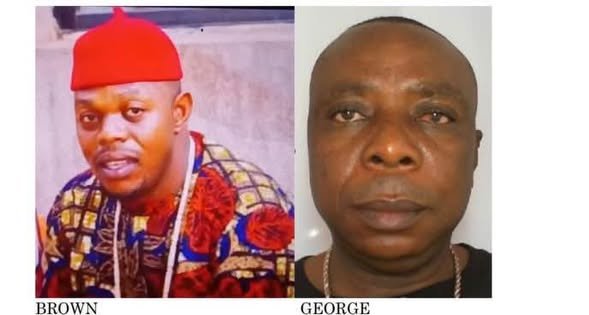
The bust of the clandestine laboratory in Eziama, Obeagu in Awgu LGA, Enugu State, is more than another drug seizure. It reveals how transnational meth production has evolved in Nigeria and how the NDLEA is adapting to track it.
The Operational Strategy of The Cartel
The syndicate’s model was built on three pillars: transnational partnership, rural concealment, and industrial-scale chemistry.
First, the link-up. Investigations name a direct partnership between local kingpins Chukwu Obumneme Christopher, 45, alias Brown, and Chukwu Georginus Monday, 60, alias George, and a Mexican national, Rodriguez Villanueva based in Mexico City. This is significant. Meth production has shifted globally from ephedrine-based cooks to P2P-based methods pioneered by Mexican cartels. The chemical haul recovered – 690 litres of methylamine, 125kg of N-phenylacetamide, 414kg of lead acetate, 769.6kg of tartaric acid – is textbook P2P production, which does not depend on ephedrine. The presence of 11kg of ephedrine at a separate location suggests they were hedging, running both methods to maximize yield.
Second, concealment and mobility. Instead of hiding in Lagos where surveillance is dense, the cartel chose a compound in a quiet Enugu community. This mirrors recent labs dismantled in Ogun, Oyo and Ebonyi – a pattern of moving super labs to rural South-West and South-East locations where land is cheap, power is off-grid, and scrutiny is low. Brown’s movements between Lagos, Enugu and Anambra between December 1-4, 2025, as tracked by NDLEA, show a compartmentalized logistics chain: sourcing and finance likely in Lagos, production in Enugu, distribution through Anambra’s commercial hubs.
Third, industrialization. This was not a kitchen cook. The seizure list – eight large fuel tanks, four commercial gas burners, four dehydrators, improvised reactors and distillation apparatus – points to a facility designed for commercial quantities. Precursors like 1,000 litres of isopropyl alcohol, 300 litres of hydrochloric acid, 290 litres each of toluene and acetone, and 400 litres of liquid sodium hydroxide indicate they were set up for sustained, high-potency batches, not one-off production.
How NDLEA Cracked It
The operation shows a shift from reactive raids to intelligence-led Special Operations Unit work. The agency says it ran months of intelligence and surveillance before moving. The critical window was the four-day tracking of Brown across three states, which led operatives directly to the lab. That suggests electronic surveillance, human assets, and inter-state coordination rather than a tip-off raid.
The prosecution strategy is also notable. The two arrested kingpins were arraigned before Justice Mabel Taiye Segun-Bello of the Federal High Court, Enugu, on five counts including conspiracy, organizing and financing a Drug Trafficking Organization, and unlawful possession of precursors. By applying for accelerated hearing and charging the Mexican partner and two other Nigerians – Uchenna alias Uche and Celestine Ikemefuna Iwuchukwu – who are at large, the NDLEA is moving to dismantle the network financially and legally, not just seize chemicals.
Chairman Buba Marwa’s statement that Nigeria will not become a haven for transnational cartels underscores the critical implication: Mexican cartels are now actively outsourcing production to Nigeria, attracted by weak regulation of precursor chemicals and available manpower. The Enugu bust proves they can build super labs that mirror Mexico’s, but also proves they can be tracked when surveillance follows the money and the movement, not just the product.