
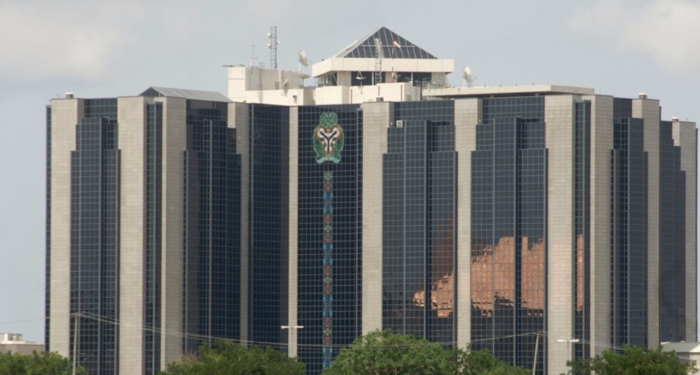
In a landmark move, the Central Bank of Nigeria (CBN) has successfully completed a sweeping bank recapitalization exercise, catapulting the nation’s financial sector into a new era of resilience, competitiveness, and growth . By mandating banks to raise their minimum capital by March 31, 2026, the CBN aims to fortify the financial system, empower lenders to fuel key sectors, and propel Nigeria towards its ambitious $1 trillion economy target, ultimately driving economic transformation and prosperity for its citizens.
The Central Bank of Nigeria’s (CBN) new capital requirements for banks mark a significant shift in the country’s financial landscape. The increased capital targets, ranging from ₦10 billion for regional non-interest banks to ₦500 billion for international commercial banks, are expected to have a profound impact on the banking sector.
The move is aimed at strengthening the capital base of banks, enhancing their resilience, and improving their ability to support the nation’s economic growth. For instance, international commercial banks will need to bolster their capital to ₦500 billion, while national commercial banks are expected to meet the ₦200 billion threshold.
The new capital requirements are likely to lead to a more robust and stable banking system, better equipped to finance large-scale projects and support Nigeria’s economic ambitions. Banks that are able to meet the new requirements are poised to benefit from improved credibility, enhanced investor confidence, and increased lending capacity. On the other hand, banks that struggle to meet the requirements may need to explore consolidation options or risk being left behind. Overall, the CBN’s move is a bold step towards creating a more resilient and competitive banking sector, capable of driving Nigeria’s economic growth and development
Today, those aspirations are largely a reality, as the Central Bank of Nigeria’s landmark recapitalization exercise has fortified the nation’s financial sector, empowering banks to fuel economic growth and propel Nigeria closer to its $1 trillion economy vision.
The recapitalization exercise has seen 33 banks meet the new capital requirements, with a total of ₦4.65 trillion in new capital mobilized. This represents a strong participation from both domestic and international investors, with 72.55% of capital sourced locally and 27.45% from international markets. The influx of capital is a testament to the confidence of investors in Nigeria’s financial sector and its potential for growth.
What the capital raising data reveals, taken together, is a sector that has been meaningfully reorganised: balance sheets are materially stronger, institutional investor participation in rights issues and public offers has been broadly sustained, and the diversity of instruments used, ranging from rights issues to private placements and parent-group capital injections, reflects the variety of strategic circumstances among participating institutions Nigeria’s banking sector has taken a significant step forward with the completion of the recapitalization exercise, resulting in a more robust and resilient financial system.
As of the March 31, 2026, deadline, a total of 33 banks have met the new capital requirements, comprising international commercial banks, national commercial banks, regional commercial banks, and other licensed institutions. Specifically, the breakdown includes [insert number] international commercial banks with ₦500 billion capital base, [insert number] national commercial banks with ₦200 billion capital base, and [insert number] regional commercial banks with ₦50 billion capital base, among others, positioning the sector to drive economic growth and development
Zenith Bank Plc. Zenith Bank raised N350.4 billion in aggregate through a rights issue of N162.08 billion (subscribed at 160.47%) and a public offer of N188.38 billion (subscribed at 100.78%). Post-recapitalisation capital stands at N614.65 billion, representing a 22.9 per cent premium above the N500 billion threshold. The oversubscription of the rights issue reflects sustained institutional confidence in the bank’s earnings profile and dividend track record. Zenith Bank, Nigeria’s most capitalised lender, has decided to accelerate its global ambitions with a dual move: a planned London bourse listing by 2027 and the inauguration of a new corporate banking hub in Manchester, positioning Zenith as a bridge between African and European markets.
AccessCorp (Access Bank Plc). AccessCorp completed a rights issue of N370.41 billion, oversubscribed by 5.76% relative to the prospectus offer size of N351 billion, and a private placement of N40 billion, producing a corrected total raise of N410.41 billion. Post-recapitalisation capital stands at N662.22 billion, the highest in the international licence category and in the sector overall. The transaction consolidates AccessCorp’s position as the largest capitalised bank in Nigeria and provides headroom for its pan-African expansion strategy.
FirstHoldCo (First Bank of Nigeria Holdings). FirstHoldCo raised N537.60 billion in total, comprising a rights issue of N187.60 billion (oversubscribed by 25%) and a private placement of N350 billion. Post-recapitalisation capital, on a corrected basis, is N789.42 billion, reflecting the cumulative effect of base capital, the rights issue, and the private placement. The N350 billion private placement is the single largest instrument-level capital raise in the current exercise, reflecting the depth of institutional appetite for First Bank’s restructured credit.
GTCO (Guaranty Trust Holding Company). GTCO deployed a three-instrument capital structure comprising a rights issue of N156.44 billion, a public offer of N209.41 billion, and a private placement of N10 billion, bringing post-recapitalisation capital to N514.04 billion. The combination of institutional and retail participation across three instruments and the scale of the public offer reflect GTCO’s premium market-franchise positioning and broad investor base.
UBA Plc: UBA executed its recapitalisation through two phases of rights issues, with aggregate allotments of N397 billion. Phase one of N239 billion and Phase two delivered N158 billion. Post-recapitalisation capital, on a corrected basis, stands at N512.82 billion, revised from N511.82 billion in prior editions following an arithmetic audit. UBA’s pan-African deposit base and diversified revenue streams underpin the investor thesis that supported subscription levels across both tranches.
Fidelity Bank Plc: Fidelity deployed a three-instrument strategy comprising a rights issue of N29.60 billion, a private placement of N250 billion (subscribed at 109%, and a public offer of N97.50 billion (subscribed at 237%). Post-recapitalisation capital is N506.81 billion. The exceptional public offer subscription rate of 237% is the highest in the current cycle and reflects strong demand from retail investors, positioning Fidelity as a significant beneficiary of the deepening of Nigeria’s retail capital markets.
FCMB Group Plc. FCMB completed a two-phase public offer of N376.40 billion, N11.0 billion through minority divestment in FCMB Pensions Limited, and a convertible note instrument of N23.10 billion, producing a corrected total raise of N410.50 billion. Post-recapitalisation capital is N535.79 billion, which exceeds the N500 billion target. FCMB is requested to formally disclose the terms and conversion mechanics of the convertible note in its next regulatory filing.
Ecobank Nigeria (ETI Subsidiary). Ecobank Nigeria entered the recapitalisation exercise with an eligible capital of N201 billion, already meeting the N200 billion national threshold without requiring a public capital raise. ETI Group capital at the subsidiary level stands at N353.51 billion, reflecting the financial depth of the parent group and providing a structural buffer ahead of the CBN stress testing exercise.
Stanbic IBTC Bank Plc. Stanbic IBTC completed a rights issue with actual allotment of N148.70 billion against a prospectus offer of N150 billion. Post-recapitalisation capital, computed as base capital of N109.26 billion plus allotment of N148.70 billion, stands at N257.96 billion. The transaction brings Stanbic’s capital position materially above the N200 billion floor and reinforces the bank’s institutional market positioning within the Standard Bank Group network.
Commodity Market Insights
Wema Bank Plc. Wema raised N200 billion through a combination of a N150 billion rights issue and a N50 billion private placement. Post-recapitalisation capital on a corrected basis is N215.13 billion, revised from N211.65 billion in prior editions. Wema’s digital banking platform, ALAT, provides a differentiated customer acquisition channel that may support capital efficiency in the post-recapitalisation period. Talks about a possible business combination have cooled for now, but the bank remains in pole position for a merger with other Tier 2 banks, given its performance record and service value.
Premium Trust Bank Limited. Premium Trust raised N177 billion in aggregate through a N39 billion rights issue and a N112 billion private placement, with N26 billion of the announced raise pending disclosure of the instrument. Post-recapitalisation capital stands at N203 billion per company filing. Full instrument transparency is recommended in the next regulatory disclosure.
Sterling HoldCo (Sterling Bank). Sterling deployed a three-instrument structure comprising a rights issue of N28.79 billion, a private placement of N75 billion, and a public offer of N88 billion, totalling N191.79 billion on a corrected basis. Post-recapitalisation capital is N248.94 billion, representing a 24.5% surplus above the N200 billion threshold.
Union Bank of Nigeria Plc. Union Bank Plc has an unresolved issue with the TGI group, despite the action taken by the CBN. This is a matter that involves findings from the Special Investigation Report (SIR) and ongoing discussions at the highest levels. There have been ongoing bids and arrangements regarding the bank, but with key issues unresolved, it remains an uncertain candidate for recapitalisation until CBN affirms the resolution outcomes. Noteworthy must be the significant work delivered by the current management team to manage the brand and service quality, and the significant balance sheet restructuring the bank has undergone since its CBN takeover. Unfortunately, we do not have the audited and management accounts for the relevant periods to validate the information on progress received, and our enquiries to the bank and the CBN are still awaiting a response weeks later. There is no new information to adjust the projection as of March 19, 2026. This is a CBN-regulated bank, and there is no verifiable information on its capitalisation status.
Standard Chartered Bank Nigeria Limited. Standard Chartered Nigeria was recapitalised through a capital injection from the parent group, with subsidiary capital confirmed at N200 billion. The transaction reflects the standard approach adopted by foreign bank subsidiaries operating in the Nigerian market under a local incorporation model.
Globus Bank Limited. Globus completed a N102 billion rights issue, bringing post-recapitalisation capital to a corrected N200.60 billion, fractionally above the N200 billion threshold. The N0.60 billion marginal surplus above the threshold, while technically compliant, leaves Globus with a limited capital buffer ahead of the stress testing exercise.
Polaris Bank Limited. Polaris Bank’s recapitalisation route and current capital structure remain under review, given its outstanding AMCON position and unresolved status. The compliance designation of N200 billion is a regulatory projection, not an arithmetically confirmed figure from publicly disclosed capital data. The current capital, as at the last available filing, is N50.40 billion. There is no new information to adjust the projection as of March 19, 2026. This is a CBN-regulated bank, and there is no verifiable information on its capitalisation status.
Unity Bank Plc. Unity Bank has been resilient and is currently pursuing the completion of its business combination with Providus Bank, but has been unable to seek approval from the CBN since Q4’25, owing to court cases it is saddled with post-approval from shareholders. This week, it obtained a favourable decision from the Court of Appeal, which, after reviewing the case, dismissed the application filed on the 9th of March 2026. The Court of Appeal also ordered that the lower Court proceed with hearing and the determination of the matter before it, and ordered an accelerated hearing. It re-emphasises that the said orders remain valid and binding. However, in the other court case, Justice Deinde Dipeolu of the Federal High Court, having heard all arguments, stated that the appeal by the interested parties to the Supreme Court for a stay of proceedings on the merger deserves acknowledgement, and the case on the Providus-Unity Bank merger has been adjourned till Tuesday, March 24th, 2026. The Judge stated that he did not want any form of confrontation with the apex court and would await the Supreme Court’s ruling. Resolution of the combination represents another time-sensitive remaining case in the national licence category.
Optimus Bank Limited. Optimus Bank has confirmed a N200 billion capital raise. The instrument breakdown has not been publicly disclosed as of March 19, 2026. Compliance status is confirmed per regulatory record. A note in the tracker flags that if the N200 billion figure represents an additional raise on top of the existing N35 billion base, the total capital would be N235 billion. Clarification of the basis of the N200 billion figure is recommended.
Citibank Nigeria Limited. Citibank Nigeria was recapitalised through a Citigroup parent injection, with subsidiary capital confirmed at N200 billion. This approach is consistent with Citigroup’s global policy of supporting regulated subsidiaries through parent capital transfers rather than public market transactions.
Keystone Bank Limited. Keystone Bank is under CBN receivership and AMCON supervision. Its recapitalisation route and capital position have not been publicly disclosed as of March 19, 2026. The bank carries a full N200 billion capital gap relative to the national licence threshold, making it the most structurally uncertain institution in the compliance tracker. A foreign group (Oman) is understood to have been identified as the preferred bidder, with another local firm (SIFAX) as a reserve bidder. There is no new information to adjust the projection as of March 19, 2026. This is a CBN-regulated bank, and there is no verifiable information on its capitalisation status
With stronger capital bases, banks can now better absorb shocks, align with Basel III standards, and maintain financial stability. This is particularly important in today’s volatile economic environment, where banks need to be resilient to withstand external pressures. Improved risk management and governance structures are being embedded sector-wide, enhancing the overall stability of the financial system. This will help to mitigate the risk of bank failures and protect depositors’ funds.
The recapitalization also enables banks to finance large-scale infrastructure, energy, manufacturing, and technology projects that require long-term, high-value funding. This will support the renewed industrialization and export diversification agendas, driving economic growth and development. The CBN’s efforts aim to ensure that Nigerian banks are fit for purpose in a trillion-dollar economy, driving financial inclusion and broadening access to credit nationwide.The initiative reflects strong coordination among the CBN, the Ministry of Finance, and the capital markets. According to CBN Governor Olayemi Cardoso, “Sustainable economic growth is unattainable without a resilient financial system. This recapitalization ensures Nigerian banks can fund the scale of transactions needed to drive a $1 trillion economy.” The Governor’s statement underscores the importance of a strong financial system in driving economic growth.
The recapitalization marks the most significant banking reform since 2005, modernizing regulatory and risk management frameworks. With stronger capital, better risk management, and tighter oversight, Nigerian banks are ready to support individuals, businesses, and the growing economy. As the CBN builds a stable, transparent, and resilient financial system, the benefits are expected to be structural and enduring: stability, global competitiveness, and sustained GDP growth.Banks that are yet to fully recapitalize remain functional and are in the process of recapitalization. The CBN’s efforts are focused on ensuring that all banks meet the new capital requirements, thereby strengthening the overall financial system. With the recapitalization exercise complete, the focus now shifts to implementation and ensuring that the benefits of the exercise are felt across the econom