Bola Tinubu’s Economic Pragmatism: What the Numbers Show Since May 2023

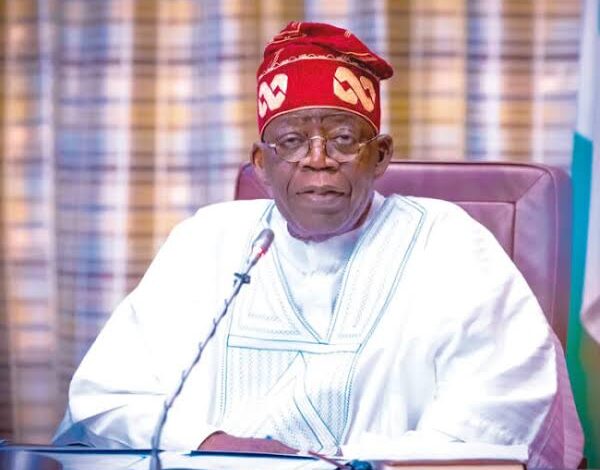
When President Bola Tinubu declared “subsidy is gone” on inauguration day, it marked the start of a deliberate shift from price distortion to price reality. Two years on, the changes across subsidy savings, foreign exchange inflows, and tax revenue illustrate why this approach is often described as pragmatic: painful in the short run, but aimed at correcting structural fiscal and foreign exchange imbalances that had constrained Nigeria for decades.
The removal of the petrol subsidy immediately altered the fiscal landscape. The subsidy had cost ₦4 trillion in 2022 alone, and by ending it in May 2023 the administration began reclaiming fiscal space that had been absorbed by consumption. The Federal Government reported saving ₦1.45 trillion between June and September 2023, and by November 2025 the National Orientation Agency put cumulative savings at over $84 billion. The World Bank’s own projections aligned with this trajectory, estimating ₦2 trillion saved in 2023 and more than ₦11 trillion by the end of 2025. Finance Minister Wale Edun further noted that savings from subsidy removal and foreign exchange reform together reached $20 billion. Crucially, these resources were not retained at the centre but redistributed. FAAC allocations to states tripled from ₦760 billion in 2023 to ₦3.2 trillion in 2024, and the NOA stated that $84 billion is now financing 40 key road projects across the country. Tinubu himself has framed the redirection toward social safety nets, public transport, and infrastructure as the core justification for the policy. In this way, the administration chose to stop borrowing to fund consumption and instead recycle savings into capital spending and subnational transfers, accepting short-term hardship to avoid a deeper fiscal crisis.
The same logic of correcting distortions guided the reform of the foreign exchange market. In June 2023, the Central Bank collapsed multiple FX windows into the Investors and Exporters window and adopted a “Willing Buyer, Willing Seller” model. The effect was an immediate increase in transparency and a narrowing of the gap between official and parallel rates. Total FX inflows into the economy rose 18.7% year-on-year to $28.92 billion in Q1 2025, and for January to August 2025 they reached $74.14 billion, a 21.3% increase compared to the same period in 2024. Within the I&E window, inflows hit $1.41 billion in June 2023, up 23% month-on-month after unification, while IMTO remittances surged 45% to $4.76 billion in 2024 after the CBN removed rate caps. Yet the adjustment came with trade-offs. Net FX inflow fell 18.3% year-on-year to $61.29 billion in the eleven months of 2025 due to lower inflows through the CBN itself. Nonetheless, arbitrage shrank, and foreign portfolio investors returned, bringing $1.3 billion in September 2025 alone. The CBN has also said that a $7 billion FX backlog was cleared and that external reserves now exceed $38 billion. The pragmatism here lay in accepting a weaker naira in exchange for restoring transparency, making exports and remittances viable, and reducing the risk premium that had discouraged foreign investment.
Revenue reform formed the third pillar of this shift. Shortly after taking office, Tinubu appointed Zacch Adedeji as FIRS chairman in September 2023 and established the Presidential Committee on Fiscal Policy and Tax Reforms. The focus was less on raising rates than on improving administration, digitization, and compliance. The results have been measurable. Between October 2023 and September 2025, the FIRS collected ₦47.39 trillion, a 115% increase from the ₦21.97 trillion recorded in the preceding two years. Monthly revenue rose from ₦711 billion in May 2023 to ₦3.64 trillion by September 2025, a 411% increase. Within this, non-oil revenue grew from ₦151 billion to ₦1.06 trillion over two years, while VAT collections tripled to ₦723 billion and customs duties rose to ₦322 billion. The taxpayer base expanded by over 19 million individuals, including 814,000 new corporate taxpayers. For January to August 2025, non-oil receipts accounted for ₦15.69 trillion, or 75% of total revenue, underscoring the administration’s stated goal of reducing reliance on oil and borrowing.
Of course, pragmatism has had costs. Inflation spiked in the aftermath of subsidy removal and foreign exchange unification, and remittance inflows dipped 11.78% year-on-year in the first half of 2025. Critics have also pointed to the slow rollout of social protection measures and a weak supply-side response constrained by insecurity and power deficits. Yet the alternative—continuing subsidies and maintaining multiple exchange rates—was projected to cost ₦13 trillion by 2025 and would have kept Nigeria borrowing to finance consumption rather than investment.
In sum, Tinubu’s economic policy since May 2023 has been pragmatic in the economic sense of removing distortions, pricing risk correctly, and expanding the tax base. The numbers show measurable shifts: subsidy savings redirected to states and infrastructure, higher market-driven foreign exchange inflows despite volatility, and record tax collection driven increasingly by non-oil sources. Whether this translates into sustained and inclusive growth will depend on execution, particularly on controlling inflation, improving security, and ensuring that revenue gains are translated into productive investment. For now, however, the data suggest that the short-term pain has been tied to correcting long-standing imbalances rather than postponing them for another administration to face.