
Beyond Price Stability: How CBN Reforms Reshaped Banking, Payments and Credit to the Real Sector Since 2023

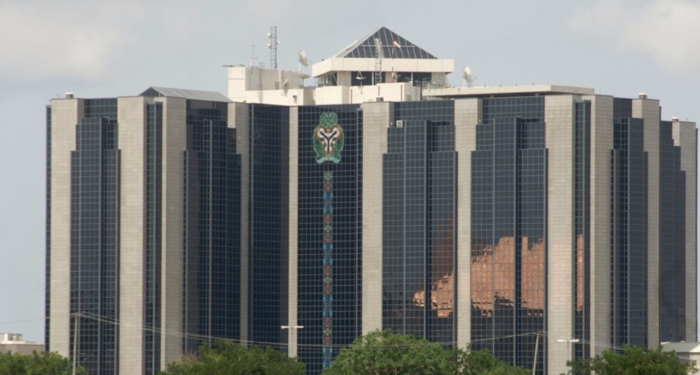
When the Central Bank of Nigeria launched its policy reset in 2023, public debate centered on two visible problems: inflation and the exchange rate. Those were the fires everyone could see. But behind them, Governor Olayemi Cardoso’s team was working on a quieter overhaul with longer consequences — how banks are capitalized, how they are supervised, how money moves, and how credit reaches the real economy. Three years on, the results are no longer projections. Banking is better capitalized and more resilient. Payments are faster and more inclusive. Credit is tighter, but more targeted and less distorted.
The starting point was fragile. It had been 15 years since the last major raise in minimum capital, even as the economy grew, risks became more complex, and the naira depreciated. A bank considered “well capitalized” in 2010 could not fund large infrastructure, power, or manufacturing projects in 2024. At the same time, years of COVID-era regulatory forbearance allowed banks to restructure loans without classifying them as non-performing. Reported NPL ratios stayed low, but asset quality problems were hidden. Fintech had outpaced regulation, creating both innovation and risk. Financial inclusion had improved, yet SMEs, agriculture and manufacturing still struggled to access affordable credit. Then came subsidy removal and FX unification. Liquidity tightened and borrowing costs rose across the board. The CBN’s task was to strengthen the system without triggering instability.
The first move was to restore honesty to the books. The Bank ended COVID-era loan restructuring concessions and ordered a full asset quality review. Loans that had been kept alive under forbearance were either properly provisioned or moved to NPL status. Prudential guidelines were tightened and the Cash Reserve Ratio was raised to 45% to mop up excess liquidity. In the short term it slowed credit growth and forced banks to recognize losses. In the medium term it gave depositors, investors and regulators a true picture of sector health. Without that cleanse, recapitalization would have been built on a weak foundation. To institutionalize the shift, the CBN created a dedicated Compliance Department covering financial crime, market conduct, corporate governance and ESG. In January 2024 it dissolved the boards and management of three banks over serious governance breaches — a signal that reporting failures would attract consequences, not extensions.
The second and most structural reform was recapitalization. In March 2024 the CBN announced new minimum capital requirements, the first major review since 2005. International banks must now hold ₦500 billion, up from ₦50 billion. National banks go to ₦200 billion from ₦25 billion. Regional banks to ₦50 billion from ₦10 billion. Merchant banks to ₦50 billion, and national non-interest banks to ₦20 billion. Banks have until March 31, 2026 to comply through equity injection, retained earnings, rights issues, and mergers and acquisitions.
The effects have come quickly. By mid-2025, over ₦2.3 trillion in fresh capital had been raised through the capital market, led by tier-1 banks. Capital adequacy ratios are now well above regulatory minimums, giving banks bigger buffers against losses. Consolidation is also underway as smaller banks explore mergers or downscale to regional licenses. The sector will likely have fewer players, but with greater size and capacity. Most importantly, larger capital bases mean banks can underwrite bigger single-ticket loans to power, transportation, housing and manufacturing without breaching obligor limits. That capacity is critical as fiscal space remains tight and private investment must do more of the heavy lifting toward a $1 trillion economy.
Cardoso has paired size with discipline. To ensure the estimated ₦4.14 trillion being raised is not misapplied, the CBN introduced risk-based capital requirements that tie capital to each bank’s risk profile and ended regulatory forbearance entirely. New circulars restrict insider-related lending. Updated Corporate Governance Guidelines define board independence, tenure and responsibilities. The credit-risk framework is being redesigned to enforce stronger accountability for how new funds are deployed and to break the boom-and-bust cycle that followed past recapitalizations. On resilience, the CBN has moved from assurances to evidence. Key financial soundness indicators meet prudential benchmarks. The NPL ratio remains within the 5% limit and the industry liquidity ratio sits comfortably above the 30% floor. Top-down stress tests across 34 commercial and merchant banks showed the system can withstand mild and moderate shocks, with vulnerability only under severe and prolonged stress. The macro backdrop supports this: FX market turnover rose 226% year-on-year and external reserves climbed above $41.5 billion. Portfolio inflows reached $3.2 billion in 2024 as investors responded to cleaner books, and dollarization of deposits slowed as confidence in naira assets returned.
Parallel to banking, the payment system was deepened. Since 2023 the CBN has accelerated open banking frameworks and strengthened oversight of fintechs and payment service providers. The eNaira was repositioned as infrastructure for government payments and inclusion. More impactful has been the expansion of instant payments and interoperability. NIBSS data show transaction volumes on NIP and USSD channels continued to rise even as cash became more expensive after subsidy removal. KYC requirements were tightened while agent onboarding was eased in rural areas. The result is a payment ecosystem less dependent on physical cash and more resilient to shocks — a critical buffer when inflation was eroding purchasing power and when financial inclusion needed new channels.
The third area is credit to the real sector, where the trade-offs have been sharpest. As the MPC raised policy rates above 27%, lending rates crossed 30%. That slowed loan growth, especially for SMEs and manufacturers who had relied on concessionary intervention funds that were now discontinued. The forbearance cleanse made banks more cautious as they cleaned their books. The CBN’s stance was deliberate: stop subsidized lending that distorted risk pricing, and let banks lend based on proper credit assessment and stronger capital. To cushion the transition, the Bank shifted toward targeted interventions delivered through commercial banks — facilities focused on agriculture, manufacturing and export-oriented firms, with stricter monitoring. Credit to the private sector grew more slowly in 2024, but its quality improved. With forbearance removed and capital bases stronger, banks became more disciplined in assessing borrowers. More credit began flowing through formal channels rather than opaque intervention windows. Financial inclusion continued to rise through partnerships with agents, fintechs and microfinance institutions.
None of this solves Nigeria’s structural problems. Infrastructure gaps, insecurity and weak contract enforcement still limit how much credit can productively flow to agriculture and SMEs. Credit remains expensive in the short term, and there is a risk that too much capital chasing too few bankable projects could pressure lending standards once the March 2026 deadline passes.
But the direction has changed. Where the previous approach managed problems after they appeared — delayed approvals, selective enforcement, broad assurances — the current approach seeks to prevent them. Delayed bank results have been replaced by continuous supervision. Selective forbearance has been replaced by uniform capital and governance rules. Claims of resilience have been replaced by stress-tested data.
The lesson of the last three years is that price stability is only one part of central banking. Stability also requires honest reporting, adequate capital, efficient payments, and disciplined credit allocation. Recapitalization ensures the banking sector has the size and strength to finance growth when macro conditions improve. Payments are more inclusive. Credit, though more expensive, is now allocated with fewer distortions.
Inflation may still be above target. The naira may still be adjusting. But the financial system is stronger because its weaknesses were faced, not hidden. It is bigger, better capitalized, and more market-driven. If fiscal policy and structural reforms keep pace, that foundation can support sustainable expansion. If they don’t, the system is at least better positioned to withstand the next shock.