
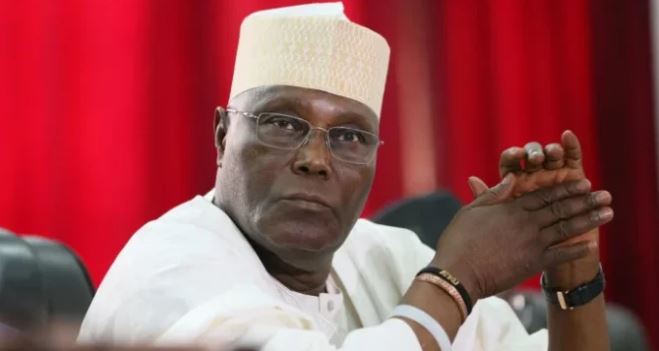
Three years to the 2027 elections, former Vice President Atiku Abubakar has returned to the headlines not with a policy document, but with a $1.2 million contract in Washington. The filing is public under the U.S. Foreign Agents Registration Act. Atiku retained the firm Von Batten-Montague-York, L.C. for 12 months to handle “strategic communications and government relations,” with the stated goal of counterbalancing narratives from Abuja and reintroducing his name into U.S. policy circles. The choice itself is the message. After five presidential attempts between 2007 and 2023, Atiku’s domestic coalition is fractured, his party is in opposition, and the national debate has moved to fiscal discipline, subsidy removal and FX reforms under the Tinubu administration. On those issues he has offered only rhetorical reversals, not a detailed alternative. Hiring a foreign lobbyist at this point is less about ideas and more about optics. It is the move of a politician who no longer believes domestic performance alone can carry him, so he is buying relevance abroad and hoping it translates into credibility at home.
That gamble cannot be separated from the record he is trying to reframe. The most damaging part of that record comes from the very administration he served in. As Vice President to Olusegun Obasanjo from 1999 to 2007, Atiku was at the center of government. The relationship ended in open war, and Obasanjo has never let it go. In his 2014 book My Watch he accused Atiku of spending his time in office to enrich himself and declared him unfit for the presidency. During the 2019 campaign he went further, saying publicly, “I pray that God will not allow him near the seat.” For a candidate, there is no heavier burden than being rejected in those terms by the president you served under. It creates a permanent question mark over judgment and character, one that Atiku has answered with counter-accusations but never with documents that close the case.
Two policy episodes from that era continue to define him. The first is electricity. Between 1999 and 2007 the Obasanjo government spent a reported $16 billion on power sector reforms. Atiku, as chairman of the National Economic Council and a key member of the economic team, was part of those decisions. The result Nigerians got was not megawatts, but tariffs and darkness. Critics argue the money went into a cycle of contracts, consultants and abandoned projects with little accountability. Defenders say it was a collective cabinet failure and a structural problem. In politics however, $16 billion with nothing to show becomes shorthand for waste, and because he was second in command, Atiku cannot be excised from that chapter.
The second is privatization. As chairman of the National Council on Privatization, he oversaw the sale of more than 100 public enterprises — cement plants, hotels, telecom assets and others. The logic was to shrink government and raise efficiency. The politics of it was messier. There were allegations of rushed valuations, sales to cronies, and assets disposed below market value. The House of Representatives probed the exercise in 2008. No criminal conviction followed, but the perception hardened: that public assets were sold in a way that benefited a few while institutions collapsed. That perception now follows him into every debate about who can be trusted with the public till.
Taken together, this explains the Washington contract. It is not about influencing U.S. policy. It is about manufacturing the impression of international gravitas for a home audience that has heard the same promises for 20 years. A politician with a fresh domestic narrative and a new base would not need to outsource relevance. Atiku has name recognition, party structure and money, but he is running short of domestic arguments. His past is being litigated by his former boss. His signature policies are remembered more for controversy than results. And his current strategy is to generate headlines abroad rather than build them in Sokoto, Kano, or Port Harcourt.
That is the core of the desperation. In politics, desperation is not just about losing. It is about substituting spectacle for substance. When millions are spent abroad while there is no new economic blueprint at home, it signals a campaign betting on noise rather than numbers. Nigerian elections are not decided by FARA filings or foreign press releases. They are decided by fuel prices, power supply, and jobs. On those three metrics, Atiku’s record is exactly what his lobbyists are being paid to reframe. Whether that reframe works in 2027 will depend less on what is said in Washington, and more on whether voters believe a man with Obasanjo’s verdict, a $16 billion power legacy, and a privatization record can suddenly offer something new.