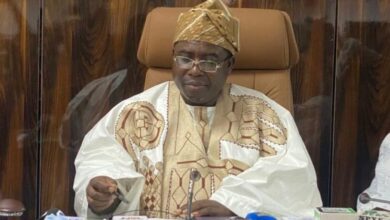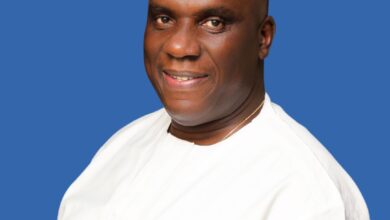

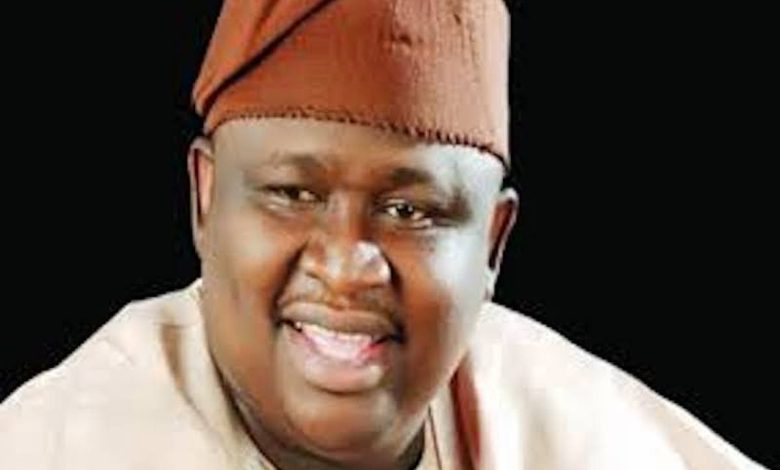
Senator Solomon Olamilekan Adeola walks with the quiet confidence of a man with a mission to serve his people. Broad-shouldered, deliberate in speech, and disarmingly accessible, he cuts the figure of a modern political craftsman: part technocrat, part grassroots mobilizer, and wholly immersed in the business of governance in the crowded theatre of Nigerian politics, where ambition often outpaces delivery,
However, Adeola’s story stands out for one reason: he has made performance his loudest campaign message. Yet he is simply known as Yayi, an epithet that speaks volume about his popularity and acceptance across all levels of social strata.
As Ogun State inches toward the 2027 governorship election, a familiar question echoes across its towns and cities—from Abeokuta’s political salons to the industrious corridors of Ota: who has the capacity not just to govern, but to transform? For a growing number of observers, stakeholders, and ordinary citizens, the answer is increasingly converging around one name—Yayi.
Who then is Yayi? What makes him stand on the threshold of history? Why does his name ring a bell whenever the 2027 governorship election is mentioned? What makes him the best fit? The reason is not far-fetched. It is the Yayi phenomenon.
To understand the Yayi phenomenon is to look beyond campaign slogans and into the architecture of impact. To understand Yayi’s edge, one must begin in Ogun West, a region that for decades lingered at the margins of the state’s developmental map. Today, that narrative is shifting—concretely, visibly, measurably.
Throughout his public life, Yayi has moved with a clarity of purpose that now finds its most natural expression in his governorship ambition. What distinguishes him in the crowded field of aspirants is not merely popularity or political reach, but the rare alignment of experience, performance, and timing. In Ogun State today, the demand is not for a figurehead but for a builder—someone who understands the grammar of governance and possesses the discipline to translate vision into measurable outcomes
Before politics, Adeola built a solid professional foundation. As a chartered accountant, he navigated the demanding world of finance with precision, working in reputable organizations and eventually establishing his own enterprise. This phase of his life was not merely preparatory; it was formative. It gave him an understanding of systems, accountability, and resource management—skills that would prove invaluable in public office.
A Story of Achievements
As senator representing Ogun West, Yayi has built a reputation anchored in delivery. Roads once dismissed as political afterthoughts now hum with economic life. Classrooms have risen where there were none. Entire communities—long resigned to neglect—have found themselves stitched back into the fabric of development.
Yayi has overseen the construction of roads that have reconnected isolated communities and revived local economies. What were once impassable routes have become arteries of commerce, enabling farmers, traders, and small businesses to thrive. But infrastructure, for him, is only the foundation.
Education has been another cornerstone. From the construction of over 150 modern classrooms to the establishment of ICT centres across key institutions, Adeola has invested heavily in human capital. His intervention at the Federal Polytechnic, Ilaro—supporting its transition toward a university—signals a long-term vision: building not just schools, but systems of knowledge that can sustain generations.
Through expansive empowerment programmes, he has trained thousands of youths, equipped entrepreneurs, and extended financial lifelines to women often excluded from formal opportunities. Over 6,000 constituents trained in vocational skills. More than 10,000 beneficiaries of grants, tools, and startup support under his Mega Empowerment Programme. Women, youth, artisans—groups often sidelined in policy conversations—have found in Yayi a consistent destiny helper .
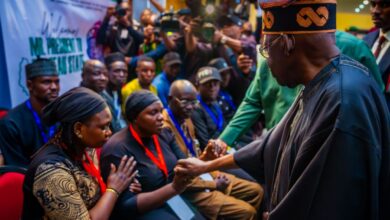
These are not abstract promises; they are measurable interventions that have altered livelihoods. It is not abstract governance. It is tangible. It is local. It is personal. In a political culture where distance often defines leadership, Yayi has chosen proximity. His open-door style—part listening tour, part governance philosophy—has allowed him to translate grassroots needs into policy outcomes. It is this rare feedback loop that has made his projects not just visible, but relevant.
The Legislator Who Thinks in Systems
Yayi’s credentials speak directly to that need. From his early legislative work in Lagos State—where he contributed to reforms that significantly boosted internal revenue—to his current role as a ranking senator and chairman of critical committees, he has demonstrated a rare mastery of governance mechanics. Budgets, policy frameworks, institutional reforms—these are terrains he navigates with ease.
His legislative footprint is equally expansive. From championing educational upgrades like the transformation of Federal Polytechnic, Ilaro, to pushing forward health and institutional reforms, laws like the National Health Insurance Authority Act and the Mental Health Act, Yayi has demonstrated an ability to translate policy into progress; It is this blend of technical competence and political instinct that positions him as more than a candidate—he is a systems thinker.
Key bills sponsored or facilitated by Yayi – to mention a few – include:
Passed into Law / Act Establishment Federal University of Technology, Ilaro (Establishment) Bill: A landmark bill upgrading the Federal Polytechnic, Ilaro, to a full-fledged University of Technology.
Nigeria French Language Village (Establishment) Bill: Formally establishing the institution in Badagry, Lagos State.
Federal Medical Centre Ijebu Ode (Establishment) Bill: Act establishing a new federal health institution.
City University of Technology Yaba (Establishment) Bill: Bill to transition Yaba College of Technology into a City University.
National Health Insurance Authority Act, 2022: A key legislation passed in the 9th Assembly aimed at improving healthcare access.
Mental Health Act, 2022: A comprehensive Act governing mental health services.
Proposed/Ongoing Legislation (10th Assembly – 2025 Focus)
Primary Health Care Development Agency Act (Repeal & Re-Enactment) Bill, 2025 (SB 900/901): A bill to remodel the PHCDA to improve primary healthcare delivery and enforce national standards.
Nigeria Railway Act (Amendment) Bill, 2023: A bill aimed at insuring goods and passengers.
National Commission for Women Act (Amendment) Bill, 2025: Focused on amending the commission’s operational framework.
National Security Trust Fund (Establishment) Bill, 2025: A bill targeting funding mechanisms for security.
Institute of Chartered Accountant of Nigeria (ICAN) Act Amendment: A bill to update the ICAN law.
Federal College of Geological and Cement Study, Iselu, Yewa North: A bill designed to utilize regional resources in Ogun West.
Key Constitutional Alteration Bills
Office of the Accountant General of the Federation Bill: Aimed at establishing an independent office separate from that of the Federal Government.
Freedom of Speech/Legislative Actions Immunity Bill: To protect lawmakers' actions in the course of duty.
As Chairman of the Senate Committee on Appropriations in the 10th Assembly, he has also been instrumental in pushing through key financial legislation, including the 2024 Appropriation Act Amendment) Bill and the N2.8 Trillion Supplementary Appropriation Bill
As Chairman of that Committee, he sits at the nerve centre of Nigeria’s fiscal architecture. It is a role that demands not just political dexterity but technical mastery—balancing competing national priorities while ensuring accountability and impact.
Even earlier, in the Lagos State House of Assembly, he played a key role in reforms that significantly boosted the state’s internally generated revenue—a testament to his longstanding expertise in public finance. In a state like Ogun—industrial, ambitious, yet under-optimized—such financial acumen is not just an asset. It is a necessity.
The Grassroots Advantage
Unlike many career politicians who drift from their base, Yayi’s strength lies in proximity. His politics is tactile. He listens. He returns. He recalibrates. This accessibility has translated into trust—a rare currency in a political landscape often marked by distance between leaders and the led. His programmes for youth and women, particularly in skills acquisition and small business support, suggest a leader who understands that development must be inclusive to be sustainable.
Experience as Currency
Yayi’s edge is also institutional. Few contenders in the 2027 race can match his legislative depth. From the Lagos State House of Assembly to the House of Representatives and now the Senate—where he chairs one of its most powerful committees on appropriations—he has accumulated a rare blend of fiscal expertise and legislative experience. His role in shaping major financial and institutional reforms underscores a familiarity with governance at scale.
The Equity Argument
Yet, beyond performance lies a deeper, more emotional undercurrent shaping the 2027 race: equity. Since the creation of Ogun State in 1976, Ogun West has remained largely outside the circle of executive power. The governorship has rotated among other zones, leaving a lingering sense of exclusion. In this context, Yayi’s candidacy becomes more than personal ambition—it becomes symbolic.
His emergence represents a convergence of merit and moment. A candidate with both the capacity to lead and the historical positioning to heal longstanding imbalances. Supporting him, many argue, is not merely a political choice but a corrective one—an opportunity to align leadership with fairness.
A Networked Leader in a Complex World
Governance in the 21st century is no longer local—it is interconnected, volatile, and demanding. Ogun’s next governor must be able to operate within this complexity, balancing economic ambition with social cohesion.
Here, Yayi’s extensive network becomes an asset. With relationships that cut across party lines, regions, and institutions, he brings to the table not just influence, but access. His ability to mobilize resources, negotiate interests, and build consensus reflects a leadership style suited for a VUCAD world—volatile, uncertain, complex, ambiguous, and disruptive.
Another defining edge is Adeola’s expansive network. His years in Lagos politics and at the national level have given him alliances that cut across regions and party lines.
But more importantly, he understands timing. His campaign structure—anchored on consensus-building, strategic outreach, and issue-based engagement—suggests a candidate not just running, but calculating. In a crowded field of aspirants, where popularity is abundant but cohesion is scarce, this strategic clarity could prove decisive. Still, he inspires confidence. In a political environment often clouded by skepticism, Yayi’s brand is built on trust—earned through consistency, reinforced by delivery.
From Senator to Statesman
If leadership is ultimately about scale, then Yayi’s governorship ambition appears less like a leap and more like a logical progression. What he has done for Ogun West, he now seeks to replicate across the state: infrastructure that unlocks commerce, policies that empower citizens, and governance that listens before it acts.
His supporters describe him as a “destiny helper.” His critics, even when cautious, acknowledge his effectiveness. But perhaps the most compelling argument for his candidacy lies not in rhetoric, but in results.
As 2027 approaches, Ogun is not just choosing a governor—it is choosing a direction. Between continuity and transformation, between promise and proof, the distinction becomes clear. And in that clarity, the Yayi factor emerges—not as a slogan, but as a statement.-
Why Yayi Stands Apart
What sets Adeola apart is not a single quality, but a convergence of many: A track record rooted in tangible development. A grassroots connection that sustains trust. A legislative pedigree that signals competence. A symbolic candidacy aligned with equity. A strategic network that amplifies reach. In a VUCA political environment—volatile, uncertain, complex, and ambiguous—these are not just advantages. They are prerequisites. Elections are rarely won on achievements alone. They are shaped by perception, structure, timing—and, crucially, contrast.
Adeola’s advantage over his opponents lies in a convergence of factors:
- Experience Across Levels: From state legislature to the National Assembly, he brings a rare continuity of governance experience. Few contenders can match his depth across both policy and grassroots politics.
- Proven Delivery: While many candidates campaign on promises, Adeola campaigns on evidence—projects executed, lives impacted, systems improved.
- Grassroots Connectivity:His open-door approach and constant engagement with constituents have built trust that transcends political cycles.
- Strategic Network: Years in national politics have endowed him with alliances that could prove critical in attracting investments and federal collaboration for Ogun State.-
The Man of the Moment
Ogun State today stands on the cusp of possibility. With its strategic location, industrial base, and human capital, it has all the ingredients of an economic powerhouse. Yet, as many analysts note, its full potential remains untapped. What the state requires now is leadership that can bridge vision with execution—someone who understands both the language of policy and the pulse of the people. Yayi’s supporters argue that he embodies this synthesis. His track record suggests a leader who does not merely diagnose problems but designs solutions—and, more importantly, implements them. In the volatile, uncertain, complex, and fast-evolving landscape of modern governance, such capacity is not optional. It is imperative.
As the campaign season gathers momentum, one thing is clear: the contest will be fierce, the stakes high, and the expectations even higher. Yet, in the midst of it all, Yayi’s candidacy offers something increasingly rare in Nigerian politics—a blend of competence, credibility, and connection. In the end, elections are choices between possibilities. And as Ogun State looks toward 2027, the question may not simply be who is running—but who is ready. For many in Ogun West, the answer already has a name: Yayi. He is the man of the moment.