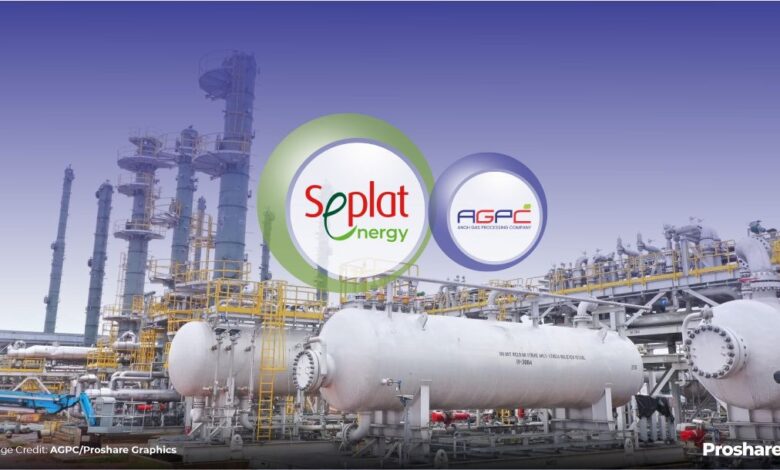
Seplat Energy Plc has announced the achievement of first gas from its 300 million standard cubic feet per day (MMcfd) ANOH Gas Project, marking a significant milestone in Nigeria’s drive to deepen domestic gas utilisation.
The Company disclosed that gas supply commenced on Friday, 16 January 2026, following the completion of the 11-kilometre Indorama gas export pipeline and the receipt of all regulatory approvals from the Nigerian Upstream Petroleum Regulatory Commission (NUPRC). The gas is being supplied by ANOH Gas Processing Company (AGPC) to Indorama under firm and interruptible Gas Sales Agreements (GSAs). To enable gas flow, four upstream wells that had been on standby since November 2025 were successfully brought on stream.
Since the first gas, wet gas production has been stabilising, delivering 40-52 MMscfd of processed gas directly from the ANOH gas plant to the Indorama Petrochemical Plant. Condensate production has reached 2.0-2.5 kboepd and is expected to increase as gas production ramps up to design capacity.
In addition, preparations are underway to initiate sales of processed gas to Nigeria LNG (NLNG), with an offtake agreement structured on an interruptible basis, and this will support the gas plant in further scaling production towards its full design capacity of 300MMcfd. Meanwhile, the construction of the OB3 pipeline export route by Nigerian Gas Infrastructure Company (NGIC), originally designated as the primary channel for ANOH gas supply to the domestic market, has resumed, and a revised completion date will be communicated in due course.
The ANOH gas plant was developed by AGPC, an incorporated joint venture between Seplat Energy and the NGIC. The integrated plant consists of two 150 MMscfd gas processing units, Liquefied Petroleum Gas (LPG) recovery units, condensate stabilisation units, a 16MW power plant and other supporting facilities, and has been built to operate with zero routine flares.
Across the unitised OML 53 and OML 21 fields, the ANOH gas plant unlocks an estimated 4.6 Tcf of a condensate-rich gas resource base. Seplat’s working interest 2P reserves in the unitised field, as booked at year-end 2024, stood at 0.8 Tcf. Seplat will derive value from two distinct income streams: wet gas sales from OML 53 to the ANOH gas plant, and dividends from its 50% equity ownership in AGPC.
The LPG produced from ANOH, combined with the LPG production at Sapele and the Bonny River Terminal (BRT), will make Seplat a leading supplier of clean cooking fuel to the domestic market. In addition, the ANOH gas plant will process the flared gas from the Ohaji field, enabling Seplat to achieve its onshore End of Routine Flaring programme, a key commercial and sustainability initiative for the company.
The ANOH gas plant has been developed without a single recordable Lost Time Incident (LTI) across 17.5 million man-hours, a testament to the whole team’s focus on safe and secure operations.
Roger Brown, Chief Executive Officer of Seplat Energy, said: “ANOH is the first of the seven critical gas development projects identified by the Federal Government of Nigeria to commence operations. It is an important strategic project for Seplat, our partner NGIC, and Nigeria as a whole. It has taken a significant amount of commitment and hard work to complete the project in a part of the onshore Niger Delta with limited gas pipeline infrastructure, and we are extremely proud of this achievement. This is our third major gas processing facility onshore and increases our Joint Venture gross gas processing capacity onshore to over 850 MMscf/d”
“ANOH will provide material income streams for Seplat, reduce our carbon intensity and contribute significantly to the 2030 production target of 200 kboepd, set at our recent CMD. It will also increase energy access for Nigerians in terms of both power and clean cooking fuel for the local communities, while advancing delivery of our mission to support economic prosperity in Nigeria.”
The ANOH Gas Project is expected to play a critical role in improving gas availability for power generation and industrial use, while contributing to Nigeria’s energy security and economic diversification agenda.