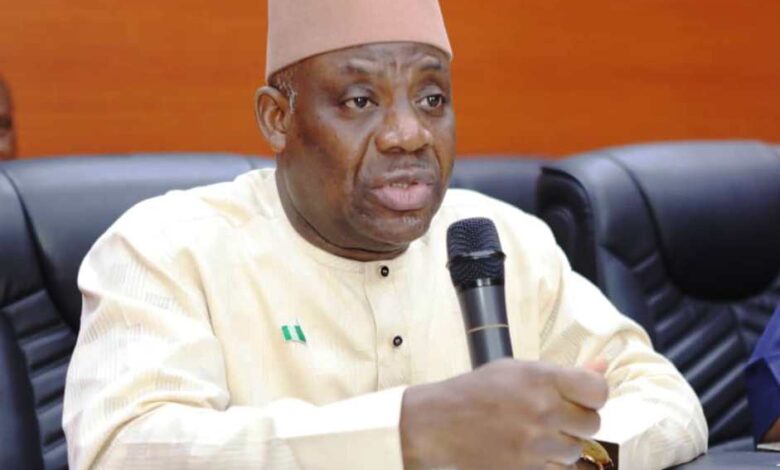
In the Nigerian education sector, a quiet revolution is underway. Led by Minister of Education, Dr. Tunji Alausa, the government is embarking on an ambitious journey to transform the country’s education system. But what’s remarkable about this transformation is not just its scope or pace, but its fundamental approach. Dr. Alausa’s leadership is not about tweaking the existing system; it’s about re-imagining it. His initiatives are not mere adjustments to the rules; they’re a wholesale change to the game itself. From digitalization and data-driven decision-making to inclusivity and innovation, the minister is pushing the boundaries of what’s possible in Nigerian education.
In a remarkable display of interdisciplinary excellence, Dr. Tunji Alausa has brought the precision of a medical doctor to the helm of Nigeria’s education sector. A nephrologist by training, a healthcare leader by experience, and a visionary by instinct, Alausa’s appointment as Minister of Education has defied conventional expectations. In just two years, he’s injected the same urgency and innovation into education that he once brought to treating kidney disease. His transformative policies, from digitalizing schools to prioritizing inclusivity, have rewritten the narrative of Nigerian education. Who would have thought that a doctor’s prescription for Nigeria’s schools would be exactly what the sector needed? The results are in, and they’re telling: Alausa’s supersonic pace is leaving a lasting impact.

One of his initiatives considered to be a critical success factor is the “Education for Renewed Hope” (NESRI) Roadmap , a comprehensive six-pillar plan aimed at transforming Nigeria’s education sector. Launched by Minister of Education, Tunji Alausa, NESRI focuses on enhancing the quality and accessibility of education, with a particular emphasis on technical training, school infrastructure, girl-child education, digital learning, teacher development, and quality assurance. The roadmap is a bold step towards addressing the long-standing challenges facing Nigeria’s education system, including inadequate infrastructure, poor teacher training, and disparities in access.
Through NESRI, the government aims to equip students with practical skills to boost their employability, improve school infrastructure, promote girls’ education, and integrate technology into education. The government has already made significant strides, enrolling over 100,000 students across 1,600 vocational colleges and introducing a new curriculum that prioritizes digital literacy, robotics, and entrepreneurship. With NESRI, Nigeria is poised to revolutionize its education sector, providing a brighter future for its young people and driving economic growth and development.
Under the incumbent minister ,the Nigeria’s education sector is already undergoing a significant transformation, with the proposed shift from the existing 6-3-3-4 education system to a 12-4 model. This reform aims to provide uninterrupted basic education to students up to age 16, addressing pressing issues like high dropout rates, inadequate literacy and numeracy skills, and limited employability among young Nigerians. The 12-Year Basic Education Model is designed to provide a more structured and comprehensive learning experience, focusing on literacy, numeracy, digital skills, and vocational training.
By integrating senior secondary education into basic education, the government hopes to reduce financial and systemic barriers that lead to dropouts, particularly in underserved regions. The extended basic education period will allow students to develop a stronger foundation in core subjects, making them better equipped to pursue higher education or vocational training. The emphasis on vocational training is a key aspect of the reform, aiming to equip students with practical skills to enhance their employability and entrepreneurship prospects. The integration of digital literacy will prepare students for a technology-driven economy, where digital skills are increasingly essential.
. However, challenges persist, such as infrastructure deficits, teacher shortages, and funding constraints, which need to be addressed to ensure the reform’s success. The potential benefits of the reform are substantial, with expected outcomes including reduced dropout rates, improved educational outcomes, and increased employability and entrepreneurship opportunities.
The abolition of the 18-year age requirement is a response to criticism that the previous policy was a barrier to education for young Nigerians. The former Minister of Education, Prof. Tahir Mamman, had introduced the 18-year age limit, citing concerns about student maturity and readiness for higher education. However, stakeholders argued that the policy would deny opportunities to academically gifted students. The new policy allows students to pursue higher education at 16, with exceptions for gifted students [5][6][7].
The policy is expected to increase access to tertiary education, particularly for students who are academically advanced. Nigeria’s education system will now align with global standards, where students can pursue higher education at a younger age. This move is likely to boost the country’s efforts to improve its education sector and increase the number of skilled graduates entering the workforce.
However, some stakeholders have expressed concerns about the maturity level of students entering tertiary institutions at a younger age. They argue that students may not be emotionally or psychologically prepared for the challenges of higher education. The government will need to ensure that adequate support systems are in place to help young students adjust to tertiary education.
The government plans to implement a uniform curriculum nationwide, ensuring quality assurance and standardization across schools. Nigeria’s new curriculum, launched in January 2025, marks a significant shift in the country’s education system, prioritizing Digital Literacy, Entrepreneurship, Vocational Training, and STEM Education. This revamped curriculum aims to equip students with practical skills, enabling them to thrive in today’s technology-driven world and address the country’s mounting youth unemployment crisis. By introducing digital literacy and coding from an early age, students will be better prepared for the modern workforce ¹ .The curriculum’s focus on entrepreneurship is particularly noteworthy, as it encourages students to develop innovative ideas and create jobs, rather than relying on traditional white-collar employment. The inclusion of vocational subjects like solar technology, fashion design, and ICT repairs will provide students with hands-on skills, making them more employable and contributing to Nigeria’s economic growth. This approach has the potential to drive economic development and position Nigeria as a hub for innovation and entrepreneurship ² ⁴ ⁵.
However, experts caution that the success of this curriculum hinges on effective implementation, infrastructure development, and teacher training. Many schools currently lack the necessary facilities and trained teachers to deliver these subjects, which could hinder the curriculum’s impact. To overcome these challenges, the government must prioritize investment in education infrastructure, provide comprehensive teacher training programs, and ensure sustained implementation. If executed successfully, this curriculum could be a game-changer for Nigeria’s education system and economic future
The Nigerian government’s recent focus on Technical and Vocational Education and Training (TVET) is a breath of fresh air for the country’s youth and economy. Under the leadership of Minister of Education, Dr. Tunji Alausa, the government has introduced initiatives aimed at revamping TVET and equipping Nigerians with industry-relevant skills. The TVET program offers free tuition, accommodation, and feeding for students in technical colleges, plus a ₦22,500 monthly stipend, making it an attractive option for those seeking practical skills.
The program’s focus on practical skills development is a welcome departure from the traditional emphasis on theoretical knowledge. With 80% of the curriculum dedicated to hands-on training in areas like CNG conversion, solar technology, and agriculture, students are equipped with the skills needed to succeed in the workplace. This approach is designed to make students more employable, increasing their chances of securing jobs or starting their own businesses. The government’s investment in TVET is expected to pay dividends, with a skilled workforce attracting foreign investment, boosting economic growth, and reducing poverty.
To ensure quality standards, the government has accredited 1,600 TVET centers and trained 5,600 teachers in trade specialization. This significant investment in human capital is expected to drive economic development, promote entrepreneurship, innovation, and job creation. The TVET program has the potential to be a game-changer for Nigeria, providing young people with the skills they need to thrive in a rapidly changing job market. If implemented successfully, it could be the key to unlocking Nigeria’s economic potential and securing a brighter future for its youth .
The Nigerian government’s digitalization and data initiatives are transforming the country’s education sector. The Nigeria Education Data Initiative (NEDI) is a major overhaul of the Education Management Information System (EMIS), aiming to digitize 202,000 schools for real-time tracking of student and teacher data. This initiative is expected to improve education quality by providing accurate data, enabling better policy decisions, resource allocation, and performance tracking across schools. By leveraging data, the government can identify areas of improvement, address inefficiencies, and make informed decisions to drive education reform.
The deployment of digital learning buses to schools is another significant initiative, providing students with access to quality education, regardless of their location. This is particularly significant for rural areas, where access to quality education is often limited. The training of 6,000 secondary teachers in Artificial Intelligence (AI) is also a notable effort to enhance teacher capacity, equipping them with the necessary skills to integrate technology into their teaching methods. These initiatives are expected to promote inclusivity and equity in education, bridging the gap between urban and rural areas.
The National EdTech Strategy is a comprehensive plan to integrate technology, including AI, into teaching and learning across all levels. This strategy is designed to promote inclusivity, multi-stakeholder collaboration, and long-term sustainability, providing a 3-5 year roadmap to accelerate the nationwide adoption of digital learning tools. The government’s focus on digitalization and data initiatives is a step in the right direction, expected to drive economic growth and development. With real-time data tracking, policymakers can make informed decisions, allocate resources effectively, and track performance across schools, leading to improved education quality and better learning outcomes.
The Nigerian government’s National Research-to-Commercialisation Policy is another bold step towards bridging the gap between academic research and market-ready products. The policy aims to promote innovation and entrepreneurship, with a focus on commercializing research outputs that can drive economic growth. By establishing research centers and providing funding for projects with commercial potential, the government is creating an ecosystem that encourages collaboration between academia and industry. This partnership is expected to yield solutions to real-world problems, making research more relevant and impactful.
The Student Venture Capital Grant initiative is a key component of this policy, providing ₦50 million in funding for student-led startups and research ventures. This initiative is designed to nurture innovation and entrepreneurship among students, equipping them with the skills and resources needed to turn their ideas into viable businesses. The government’s commitment to providing mentorship and support to recipients of the grant is a testament to its dedication to fostering a culture of innovation and entrepreneurship in Nigeria’s educational institutions.
By promoting research commercialisation and student entrepreneurship, the government is addressing two critical challenges facing Nigeria: unemployment and economic diversification. The policy has the potential to create jobs, stimulate innovation, and drive economic growth, making it a game-changer for Nigeria’s development. As the government expands the initiative to more universities and colleges, it is poised to unlock the creative potential of Nigerian students and researchers, positioning the country as a hub for innovation and entrepreneurship in Africa.
In spite of these efforts, critics are unrelenting, questioning the government’s decision to discontinue bilateral scholarships abroad and alleging that the minister is abandoning students. The Arewa Defence League has accused the Federal Government of playing politics with the Bilateral Education Agreement (BEA) Scholarship Programme, while others argue that the decision is a betrayal of the students who were promised support.
However, Chief of Staff to the Minister, Sunmaila Adiatu, has robustly defended his principal, revealing that the controversy surrounding the Morocco scholarships is largely a case of emotional blackmail. According to Adiatu, the scholarships in question are bilateral, meaning they are awarded and funded by foreign governments, not the Nigerian government. The $500 stipend provided by the federal government was a gesture of support, calculated in naira at a time when the exchange rate was more favorable. However, the implementation of this support has been marred by irregularities, with some beneficiaries allegedly collecting funds without attending school or even residing in Nigeria.
Adiatu disclosed that about 25% of the beneficiaries are currently in Nigeria, collecting stipends without being in school, while others are not even using the funds for their intended purpose. He emphasized that the government’s decision to discontinue the bilateral scholarships is a necessary step to address these abuses and ensure that resources are allocated more effectively.
While critics continue to voice their concerns out of their ignorance as explained by Dr Adiatu above , the admirers of the minister believe that the big revolution in the education sector is worth celebrating . The initiatives introduced by Minister Alausa are aimed at addressing long-standing challenges in Nigeria’s education system, including inadequate infrastructure, poor teacher training, and disparities in access.
Though challenges remain, the government’s commitment to education reform is a step in the right direction, and admirers of the minister believe that the results will be worth the effort