Finance & EconomyBusiness
Private Sector Credit Growth Slows as Lending Hits N75.6trn in February 2026


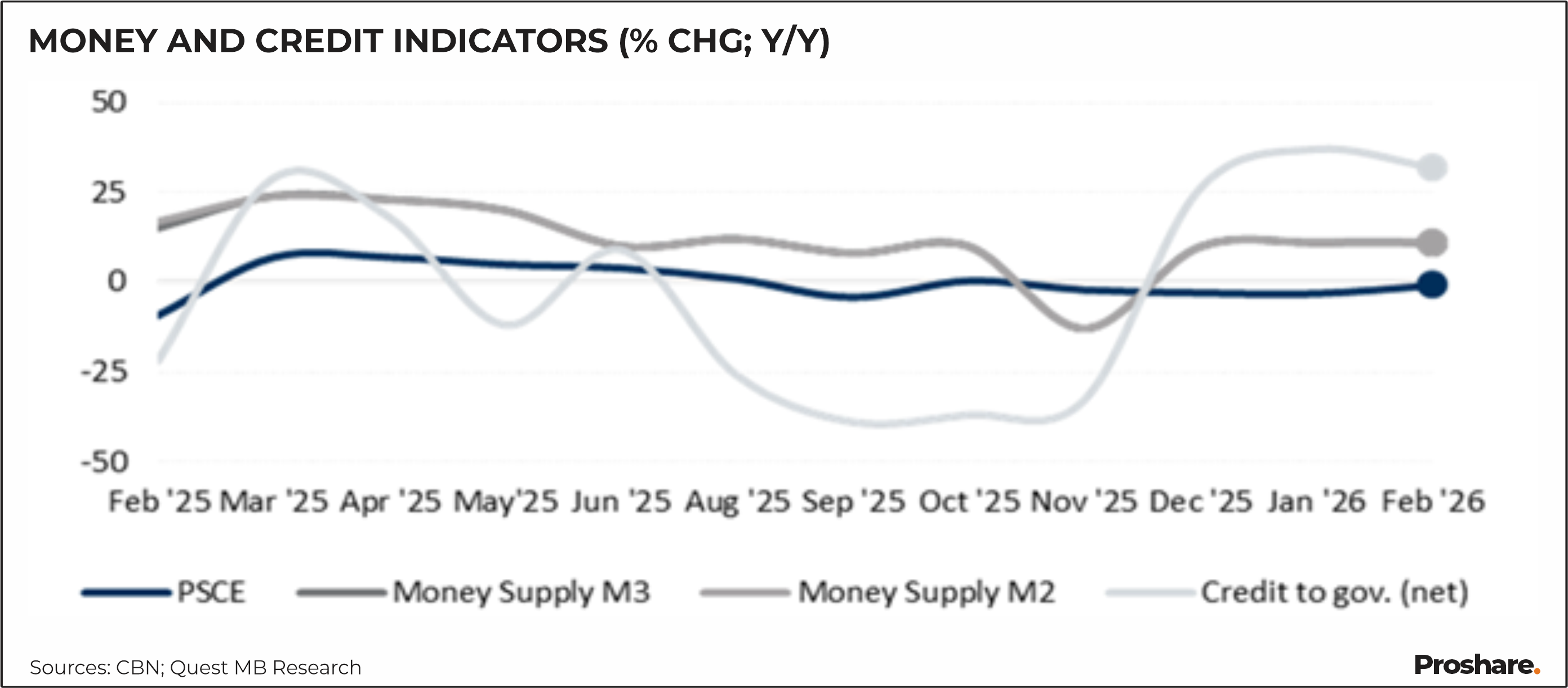
According to data published by the Central Bank of Nigeria (CBN), private sector credit extension (PSCE) grew marginally by +0.5% to N75.6trn as at end-February 2026. However, on a year-on-year (YoY) basis, PSCE declined slightly by 0.8%. The data reflect lending across the entire banking system, including state-owned development institutions such as the Bank of Industry, as well as smaller credit providers such as microfinance banks and non-interest banks. Lending by deposit money banks accounts for 69% of the total figure.
Made in Nigeria product
- The CBN’s elevated interest rate stance remains a major factor behind the constrained credit extension to the private sector.
- Despite Nigeria’s headline inflation easing for the eleventh consecutive month in February, the CBN has maintained a prudent approach to policy rate cuts in order to preserve FX stability.
- At its previous meeting in February, the Monetary Policy Committee (MPC) reduced the policy rate by 50bps to around 26.50%, while keeping all other policy parameters unchanged.
- Although monetary policy is gradually shifting toward a more accommodative stance, the cautious pace of adjustment has kept credit conditions tight, with lending activity remaining subdued.
- Broad money indicators closely monitored by the MPC, M3 and M2 expanded by 11% YoY to N123.4trn and N123.1trn, respectively.
- Credit to the government outpaced all other monetary aggregates that we track, expanding by 32% YoY (5% month-on-month (MoM)) to N35.8trn.
- The ongoing conflict in the Middle East continues to disrupt global energy supply dynamics, keeping global crude oil prices elevated.
- The pronounced pass-through of rising energy costs to consumer prices poses a renewed dilemma for both domestic and global monetary authorities in achieving price stability.
- For Nigeria, a prolonged period of rising domestic energy costs will continue to amplify pressure on consumer prices.
- Consequently, this development could slow the pace of anticipated monetary policy easing by the MPC, potentially constraining banks’ credit activity and limiting support for the real economy (see chart below)