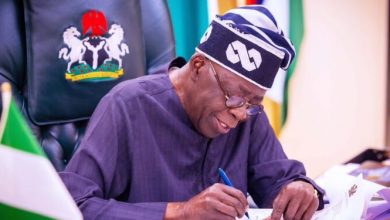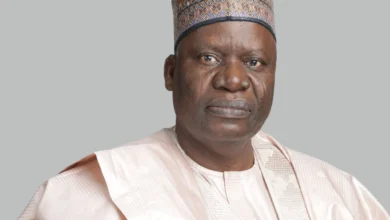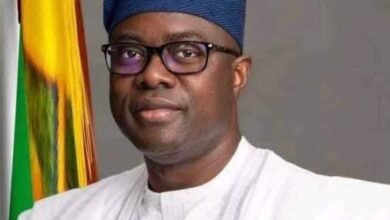

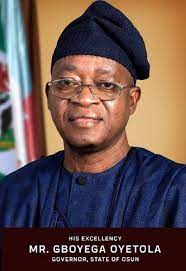
Gboyega Oyetola’s attempt to install Oyebanmiji as the next governor of Osun is being read through three competing lenses: arrogance, courage, and the long shadow of godfatherism in Nigerian politics. The move has split opinion not because succession planning is new, but because the scale of resistance it faces tests the limits of Oyetola’s political capital and the elasticity of his influence in Osun. Interpreted critically, the push reveals a former governor navigating the space between personal loyalty, party structure, and voter sentiment.
Strengths
Oyetola’s biggest asset is familiarity with the levers of state and party. As a former governor and current Minister of Marine and Blue Economy, he retains federal access, a Rolodex of technocrats, and relationships across the APC hierarchy. His tenure was marked by a quiet, technocratic style that prioritized salary payments, debt management, and low-drama governance. That reputation for financial prudence still resonates with segments of the civil service and elites who equate stability with competence. In backing Oyebanmiji, Oyetola is leveraging that network to shape a continuity ticket. He understands the delegate system, the mechanics of primaries, and the cost of campaigns. In a state where structure often beats sentiment, that is not trivial. He also benefits from incumbency memory. Unlike outsiders, he can campaign on projects and policies his administration started, and position Oyebanmiji as the vessel to complete them. The “continuity” narrative is a classic godfather tool, but it works when voters feel the previous term delivered tangible benefits. Where roads, schools, or health centers bear his imprint, Oyetola can convert concrete into political capital.
Weaknesses
The obvious weakness is electoral. Oyetola lost his re-election in 2022 to Ademola Adeleke of the PDP, and the Supreme Court affirmed that loss in 2023. Defeat strips a godfather of the most important currency: the aura of inevitability. Opponents frame his backing of Oyebanmiji as tone-deaf, arguing that a leader who couldn’t secure his own mandate is overreaching by trying to anoint a successor “against all odds.” That line sticks because Osun politics has grown increasingly personality-driven. Adeleke’s populist appeal exposed Oyetola’s vulnerability with grassroots voters, especially youths and urban poor who saw his style as distant and bureaucratic. There is also the godfatherism stigma. Nigeria’s Fourth Republic is littered with examples where attempted succession backfired: Lagos eventually moved past Tinubu’s direct picks, Kwara’s “O to ge” upended Saraki’s structure, and Edo rejected Oshiomhole’s candidate. Voters are more sensitive to imposition, and the opposition is quick to label any anointed candidate as a puppet. If Oyebanmiji is seen as Oyetola’s proxy rather than his own man, the campaign inherits Oyetola’s negatives without the benefit of his name on the ballot.
Opportunities
Yet the field is not closed. Adeleke cannot run for a third term, and the PDP will face its own succession battle in 2026. If the PDP emerges divided, APC has a lane. Oyetola’s federal ministerial role gives him access to patronage, visibility, and the ability to broker alliances in Abuja that matter during primaries and post-primary litigation. The center often decides who gets the ticket in tightly contested states, and Oyetola is now closer to that center than he was as governor. Oyebanmiji, depending on his profile, also presents an opportunity to reset. If he is younger, less tied to old factions, or strong in a zone that felt marginalized, Oyetola can frame the endorsement as renewal rather than imposition. The “against all odds” narrative can be flipped into an underdog story if the candidate runs an issue-based campaign on economy, jobs, and local government autonomy, while Oyetola provides the structure and funding. In a state with strong communal voting patterns, zoning and religious balance are tools Oyetola knows how to work.
Threats
The threats are structural and immediate. First, backlash. Osun voters have shown they will punish perceived arrogance. If the endorsement is handled as a directive rather than a negotiation, it could unite other APC aspirants against Oyebanmiji and fracture the party before the general election. APC in Osun already has competing tendencies: loyalists of ex-governor Rauf Aregbesola, federal appointees, and National Assembly members who want their own shot. A forced consensus creates primaries by litigation, and litigation drains momentum. Second, Adeleke’s PDP remains formidable. The governor has incumbency, a populist touch, and a political family with deep roots. His administration’s performance between now and 2026 will set the baseline. If he maintains salary payments, invests in visible projects, and keeps his base mobilized, the PDP will be hard to beat regardless of who APC fields. Oyetola’s move then risks looking like a personal vendetta rather than a strategic party play. Third, the national mood. Economic hardship, fuel price sensitivity, and naira volatility shape sub-national elections. The Federal Government has just ruled out new fuel and telecom taxes, but inflation and cost of living remain. Any candidate seen as Abuja’s project could carry the burden of federal policy frustrations. Oyetola, as a minister, is tied to that brand whether he likes it or not.
Conclusion
So what drives the push for Oyebanmiji? It reads less as arrogance and more as calculated risk. Arrogance would be ignoring the 2022 verdict. Courage would be backing an unpopular but competent outsider on principle. What Oyetola is doing is political self-preservation: install a loyalist, retain relevance in Osun, keep a pathway back to state influence, and ensure his legacy projects are not dismantled. Godfatherism is the method, not the motive. The question is whether Osun’s electorate still tolerates that method. If Oyebanmiji wins the primary cleanly, runs independently of Oyetola’s shadow, and speaks to current economic anxieties, the gamble could pay off and re-establish Oyetola as kingmaker. If the process looks imposed, the ticket will start the general election with a deficit no amount of structure can fix. In Nigerian politics, godfathers don’t die, they adapt. Oyetola’s next move will show whether he is adapting to Osun’s new political reality or fighting the last war.