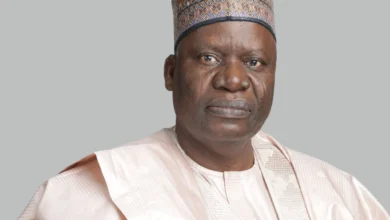
Ile-Ife woke up to blood again on September 13, 2026. The killing of Olalekan Dauda Oyeyemi, better known as Emir Ajagungbade, was announced not just as another murder, but by the Osun APC Campaign Council as proof of something deeper: that politics in Osun under the Accord government has slipped from governance into gang warfare.
According to the APC statement, Emir Ajagungbade was not an ordinary citizen. He was a man facing murder and terrorism charges, who had jumped bail and was declared wanted by police. Yet instead of facing the law, he was allegedly taking refuge at the Government House in Okefia, Osogbo. That detail alone raises the first uncomfortable question. How does a wanted suspect find shelter in the seat of power? For many residents, it reinforces the growing belief that political connection in Osun can buy immunity.
The alleged killers named by eyewitnesses are also not strangers to power. Nurudeen Alowonle, described as a factional NURTW chairman and an Adeleke appointee, and Olayemi Ojo alias “Sibi,” chairman of mini-bus operators in Ile-Ife, were fingered as the arrowheads of the attack. Alowonle’s name had come up before. The APC recalled that he was arrested in 2024 with a Beretta pistol, but the case quietly died. When both the victim and the accused belong to the same political camp and both have violent records, it stops looking like crime and starts looking like an internal fight.
And that is exactly how the APC framed it: a dangerous factional war within Accord. The trigger, they claim, was not ideology or policy, but control of the Osun State Park Management System. Reports within the statement suggest the administration was considering removing Alowonle and replacing him with Emir Ajagungbade. In a normal democracy, that would be an administrative decision. In Osun, it allegedly ended in gunfire. When appointments to manage parks and buses become worth killing for, we have to ask what kind of politics we are practicing.
This is where the problem expands beyond one death. The APC alleges that both Alowonle and Emir Ajagungbade had previously been declared wanted in connection with killings of APC members, but became “sacred cows” because of their ties to the governor. Whether every allegation is proven in court or not, the perception is already doing damage. Once citizens believe that violence has political cover, the incentive to pick up arms grows. The state loses its monopoly on force, and elections stop being about ideas and start being about who commands the most ruthless network. That the violence continued even after the August 15 governorship election makes it clearer. This is no longer about winning votes. It is about controlling rents — parks, markets, transport unions — and the money that comes with them.
Accord Party came into Osun promising an alternative. But what the Ile-Ife killing exposes is an identity crisis. A party cannot claim to be democratic while harboring factions that settle disputes with bullets. It cannot preach peace while recycling men with murder charges into appointments. The moment a political party begins to function like rival warlords sharing one umbrella, it will eventually consume itself from within. That is the path Osun Accord appears to be on right now.
The consequences go beyond party politics. Every time a politically exposed person walks free after an arms arrest, every time a wanted suspect is seen around government house, public trust in the police and the justice system erodes a little more. Young people watching this learn a dangerous lesson: that power, not law, decides who is punished. That is how a state becomes ungovernable.
So what breaks the cycle? First, the police must act without fear or favor. If Alowonle and Sibi were named by eyewitnesses, they should be arrested and made to face trial immediately. Delay or selective justice will only confirm the “sacred cow” narrative. Second, the link between politics and transport unions must be cut. Park management positions should not be handed out as political rewards. Let unions elect their leaders transparently and under security supervision. Third, there must be a deliberate mop-up of illegal arms, especially those in the hands of political appointees and their associates. A pistol found in 2024 cannot be ignored in 2026. Fourth, Accord’s leadership has to make a public choice. Expel members with pending violent crime cases and clearly distance the party from thuggery. Silence will be read as endorsement.
Democracy cannot survive if the price of a chairmanship is a human life. The death of Emir Ajagungbade is tragic, but the greater tragedy would be to treat it as just another headline and move on. Osun people deserve to know whether their government is building institutions or managing militias. Until Accord and the Adeleke administration decisively cut ties with violent networks, the accusation will stick: that power in Osun is being protected not by law, but by thugs.
Signed statements will not bring peace. Arrests, prosecutions, and a clear break from violent politics will. The question now is whether Osun’s leaders are brave enough to make that break before the next name is added to the list.