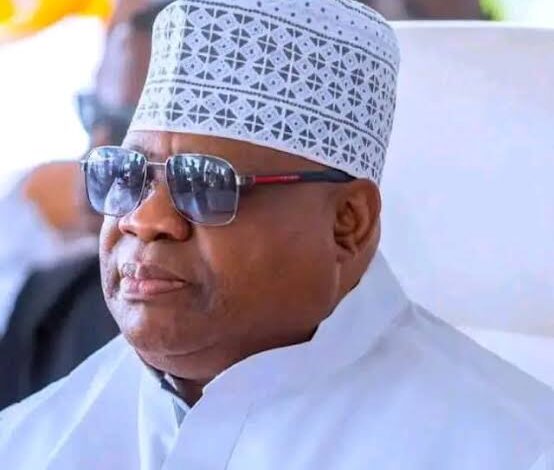
With just 11 days to the August 15, 2026 Osun governorship election, the debate in the state has moved beyond slogans to questions of trust, fairness, and political structure. For Governor Nurudeen Jackson Ademola Adeleke, the challenge is not only to defend his record, but to hold together the coalition that delivered victory in 2022.
In Osun, elections are decided at the margins. They turn on whether key constituencies feel represented, whether the party machinery is intact, and whether governance is seen as statewide rather than sectional. Right now, five critical issues are testing that foundation: a trust deficit around identity and religion, perceptions of lopsided governance and project concentration, a weakened party structure, concerns over family-centered appointments, and fractured relations with 2022 political allies. Together, these factors are creating serious headwinds for the incumbent’s re-election bid.
The first and most damaging challenge is a crisis of trust, especially around identity and religion. A persistent narrative alleges that the governor misrepresented his religious identity to secure Muslim votes in 2022. Whether or not that claim holds, perception drives turnout in Osun’s religiously balanced politics. Any erosion of confidence within the Muslim community risks lower turnout and lost votes in key LGAs like Osogbo, Iwo and Ikirun. If that gap is not closed through credible community engagement, it will weigh heavily on election day.
Governance choices have also deepened a perception of sectionalism. The partial movement of some government secretariat functions from the established Abeere, Osogbo axis toward Ede, and the visible concentration of new roads, schools and health facilities in Ede, have not gone unnoticed. In Osun, government presence equals access to jobs, contracts and influence. To many outside Ede, these decisions read as favoritism. Even if projects exist statewide, elections are won on what people see and feel. That feeling of exclusion can easily translate into apathy or opposition votes in Osogbo, Ilesa, Ikirun and other major towns.
Party structure presents another major vulnerability. The 2022 victory was powered by a disciplined PDP structure, with ward leaders, LGA chairmen and national backing doing the groundwork. Operating under Accord, or without full PDP cohesion, removes that logistical backbone. Accord does not command the same grassroots depth, funding, or historical loyalty in Osun. Without a robust structure to mobilize voters and protect results at polling units, the campaign will be relying on goodwill alone. In a competitive race, goodwill without structure rarely wins.
The composition of government has also created political friction. With about seven family members in cabinet and key positions, the administration is battling a “familytocracy” label. Regardless of competence, the optics suggest that power and patronage are concentrated in one family. That alienates party stakeholders who delivered 2022 and expected inclusion, and it gives the opposition a simple message: the government is for a few, not for all. In a state with many political families, that resentment is costly at the polls.
Finally, the governor appears to have lost touch with some of the very allies who made 2022 possible. Coalition politics is the oxygen of Osun elections. When the elders, financiers and local power brokers who delivered wards and LGAs feel sidelined, you lose money, mobilization, and critical election-day intelligence. The opposition does not need a landslide. Osun elections are decided by tens of thousands of votes. If a few LGAs that were close in 2022 swing the other way because those bridge-builders are gone, the result changes.
None of this makes defeat inevitable. Incumbency, federal backing, and appreciation for social programs can still count. But the combination of trust issues, perceptions of lopsided governance, a weaker party platform, family-centered appointments, and broken alliances creates multiple points of leakage in the incumbent’s base.
For Governor Adeleke to overcome these headwinds, the next 11 days must be about expansion, not contraction. That means reconciling with 2022 allies, making infrastructure and appointments visibly statewide, and reassuring all sections of Osun that the government belongs to them. In Osun politics, you win by broadening your coalition. Right now, the signs point in the opposite direction.
Want me to also do a shorter, social-media version of this for posting?