

Nigeria’s capital marke t started 2026 strongly, but behind the headline growth lies a story of discipline, restructuring, and strategic shifts. The first quarter saw not only a rise in market indices and capitalisation but also a market influenced by valuation awareness, regulatory actions, and institutional strategies.
Made in Nigeria product
Although strong earnings and dividend prospects drive the equity market, investor focus is shifting from speculative optimism to fundamentals. This shift is visible in sector-specific differences, especially in the banking and industrial goods sectors, where price discovery and earnings visibility increasingly influence market sentiment.
Equally, the regulatory authorities’ efforts at strengthening market integrity through sanctions, reforms to capital requirements, and stricter governance enforcement. These measures, along with ongoing recapitalisation across banking and insurance sectors, indicate a deliberate move towards creating a more resilient and transparent market framework.
Mergers, acquisitions, and strategic investments further underscore a market in transition, one seeking scale, efficiency, and deeper relevance within both domestic and regional contexts.
Looking ahead to Q2 2026, the market outlook remains cautiously optimistic. Continued growth will likely depend on a combination of robust corporate earnings, successful capital-raising activities, clear regulations, and market participants’ ability to navigate a changing macroeconomic environment.
Ultimately, Q1 2026 positions Nigeria’s capital market not just as a story of growth, but as one of maturation where discipline, structure, and strategic intent are beginning to shape the way forward.
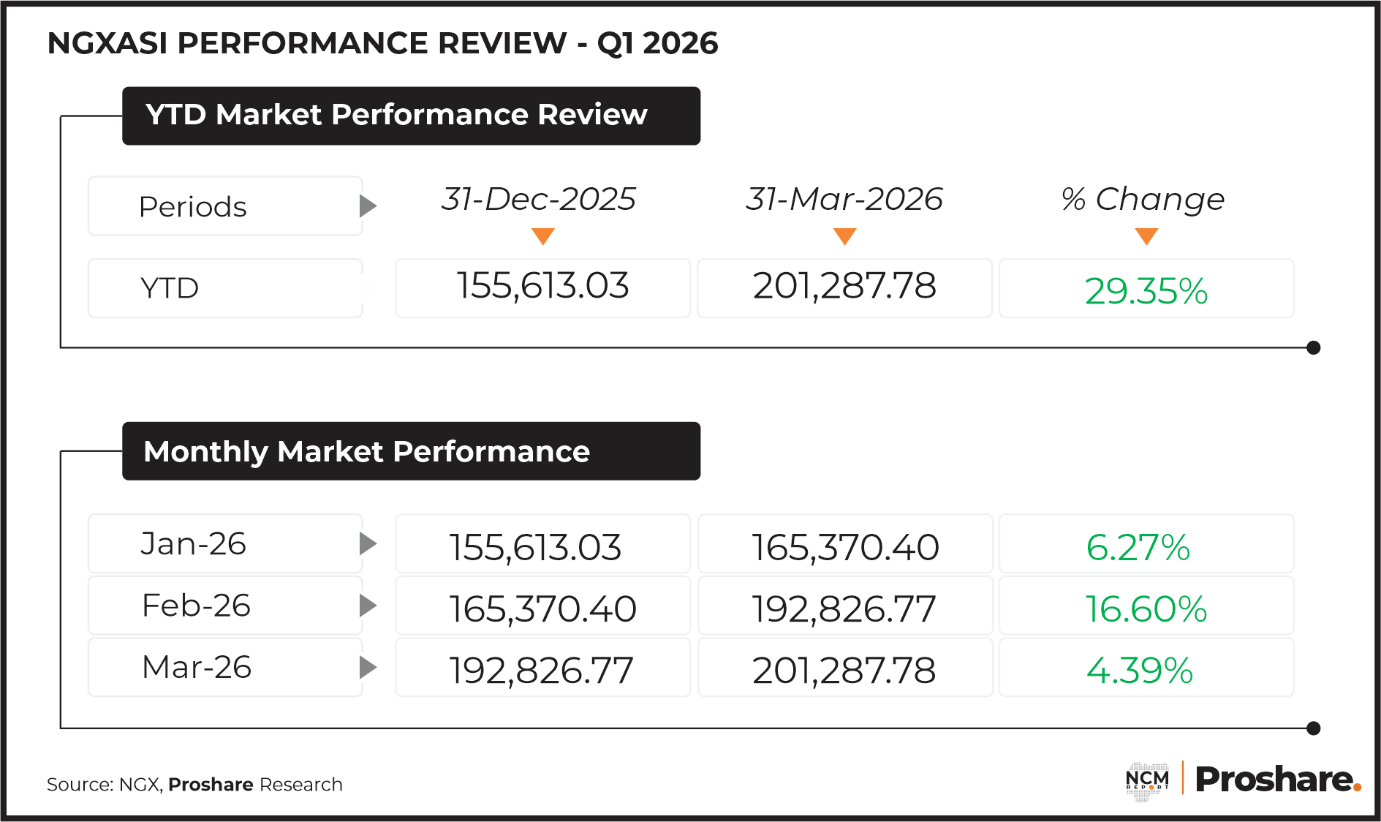
The Nigerian equity market saw strong growth in Q1 2026, with the NGX All-Share Index (ASI) rising by 29.35% year-to-date, closing at 201,287.78 index points from an opening level of 155,613.03 index points as of December 31, 2025. This reflects sustained investor confidence, supported by robust liquidity conditions and heightened market activity during the quarter.
Market data reports
The performance trajectory across the quarter shows a front-loaded rally followed by gradual moderation. In January, the market advanced by 6.27%, driven by early-year positioning and renewed buying interest. This momentum accelerated significantly in February, when the index surged by 16.60%, largely supported by strong institutional participation, particularly in banking stocks amid recapitalisation activities. By March, the pace of growth slowed, with the market posting a 4.39% gain, suggesting a phase of consolidation as investors began to take profits following the sharp gains recorded earlier in the quarter (see table 1 below)
Equity Market Performance and Structural Developments – Q1 2026
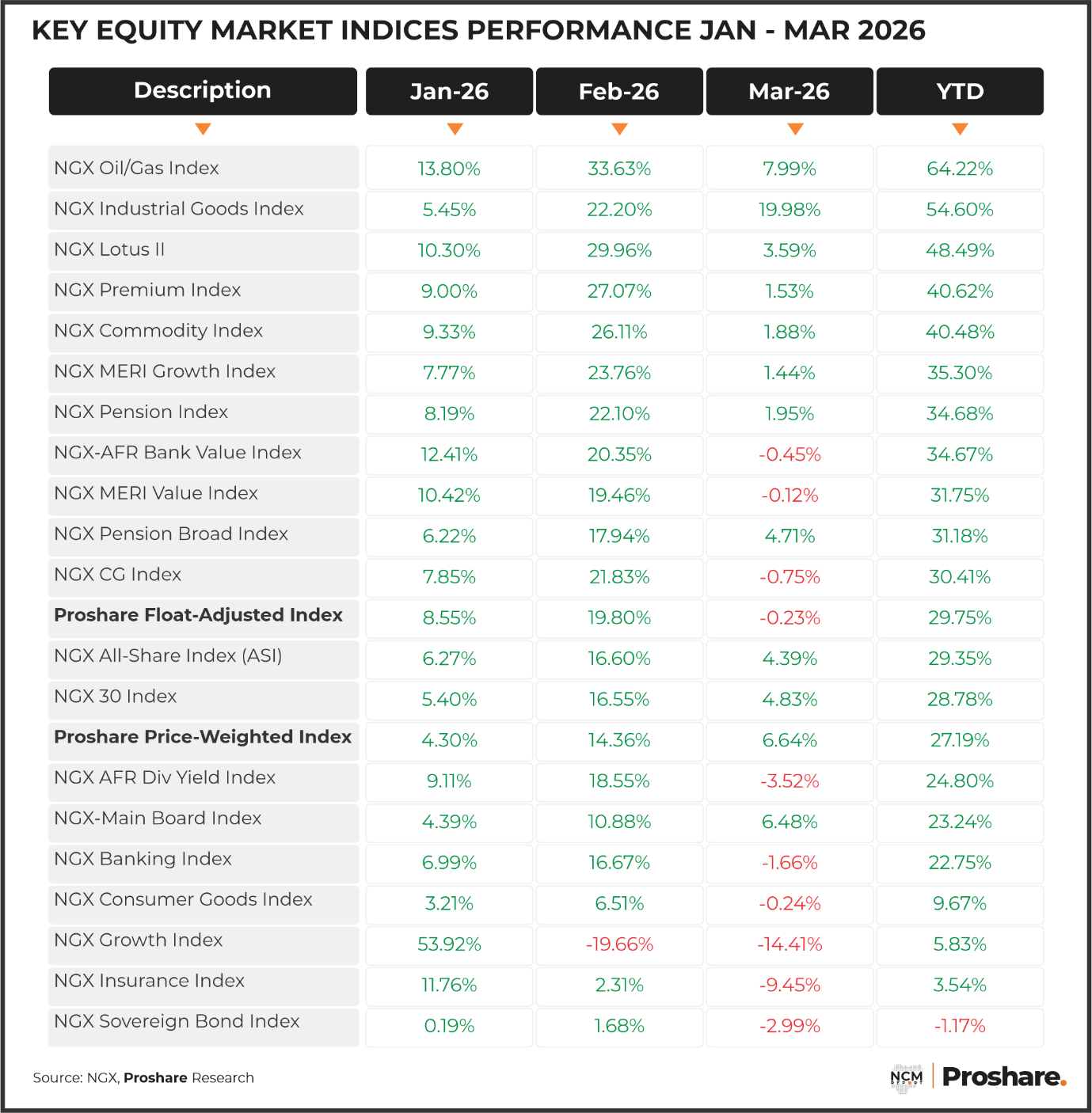
The Sectoral performance across indices reflected a clear hierarchy of leadership, anchored by Oil & Gas and Industrial Goods, with thematic indices linked to capital flows and institutional positioning.
The NGX Oil & Gas Index emerged as the top-performing sector, gaining 64.22% year-to-date (YTD), supported by sustained investor interest and pricing dynamics within the downstream segment. The Industrial Goods Index followed with a 54.60% return, reflecting continued strength in large-cap bellwethers and their outsized influence on market direction.
Market breadth remained positive but uneven, with indices such as the Commodity Index and Pension Index posting solid double-digit returns, while lagging sectors such as Insurance and Consumer Goods recorded weaker outcomes. The Insurance Index rose by just 3.54% YTD, reflecting the continued overhang from recapitalisation pressures and limited investor appetite. The NGX Growth Index also exhibited high volatility, closing the quarter with a modest 5.83% gain after sharp corrections in February and March. The trajectory of monthly performance reveals a front-loaded rally, with January and February accounting for the bulk of gains across most indices, while March reflected a broad-based moderation. Several indices, including the Banking Index, AFR Bank Value Index, and MERI Value Index, recorded negative returns in March, reflecting profit-taking and a recalibration of positions following the earlier strong rally (see table below)
The Proshare Float-Adjusted Index delivered a stronger performance relative to the broader market in Q1 2026, reinforcing its relevance as a more responsive measure of investable market opportunities. The index recorded a 29.75% year-to-date (YTD) gain, outperforming the NGX All-Share Index (ASI), which posted a 29.35% YTD return over the same period.
Stock Analyst Updates
This outperformance, though marginal, reflects the Float-Adjusted Index’s ability to better capture price movements in stocks with higher liquidity and free-float availability, thereby providing a more realistic view of investor participation and capital flows. While both indices benefited from the strong February rally and sustained positive momentum into March, the Proshare index showed slightly greater resilience in navigating mild market corrections.
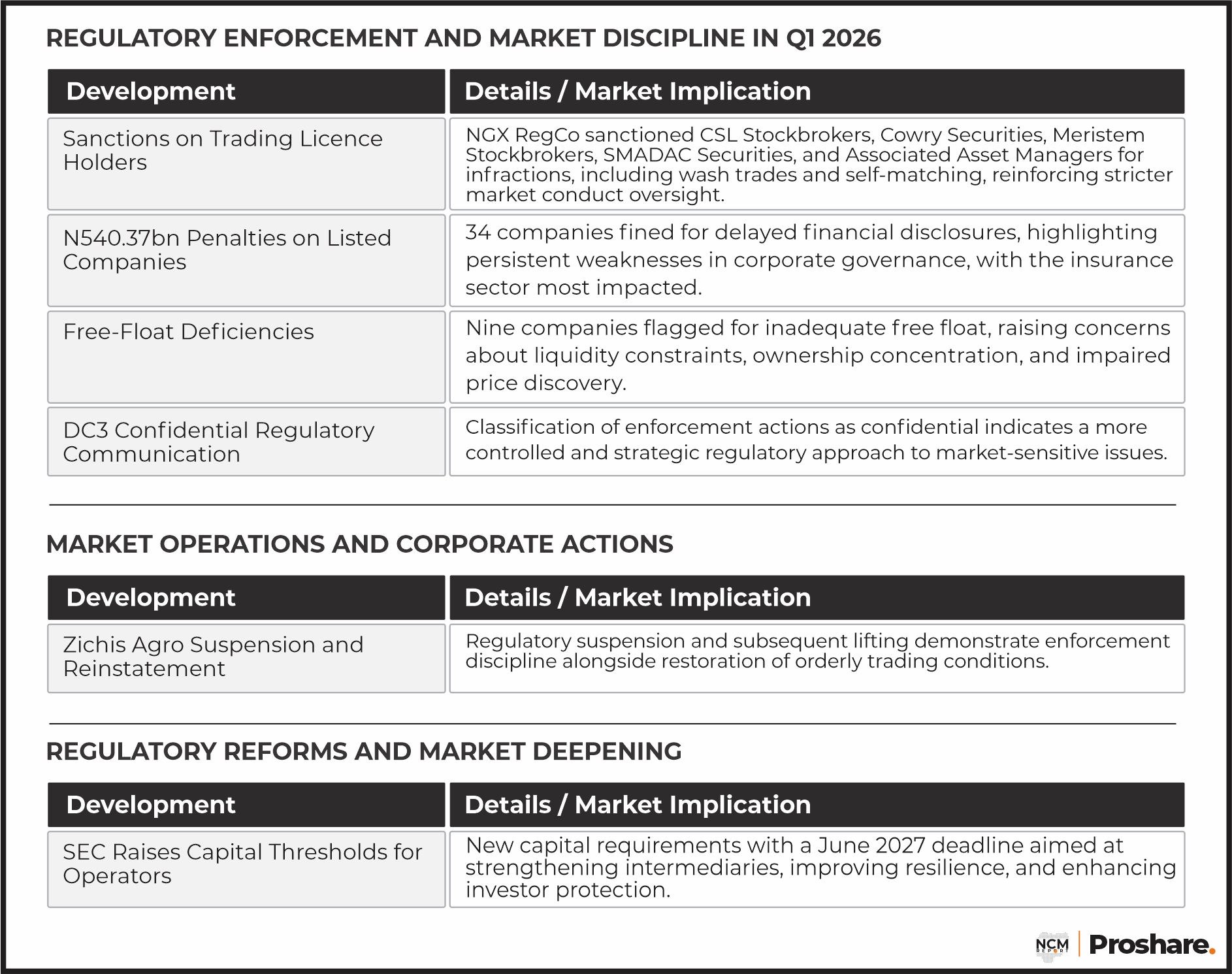
Beyond price performance, a defining feature of the quarter was the intensification of regulatory oversight by NGX Regulation Limited (NGX RegCo). In one of the most significant enforcement actions in recent cycles, sanctions were imposed on five trading licence holders for infractions, including wash trades and self-matching transactions. These practices, linked to artificial price formation and misleading market behaviour, highlight persistent vulnerabilities in market conduct. Complementing this, NGX RegCo levied N540.37m in penalties on 34 listed companies for delayed financial disclosures, with the insurance sector accounting for a significant portion of the infractions.
The February 2026 X-Compliance Report further flagged nine companies for free-float deficiencies, reinforcing concerns around ownership concentration and its implications for liquidity and price discovery. Zichis Agro’s suspension and subsequent reinstatement illustrate the balance between regulatory discipline and restoration of orderly trading conditions. The regulatory reforms by the Securities and Exchange Commission (SEC), particularly the introduction of revised capital thresholds for market operators with a June 2027 compliance deadline, are expected to strengthen intermediaries and improve investor protection (see table below).
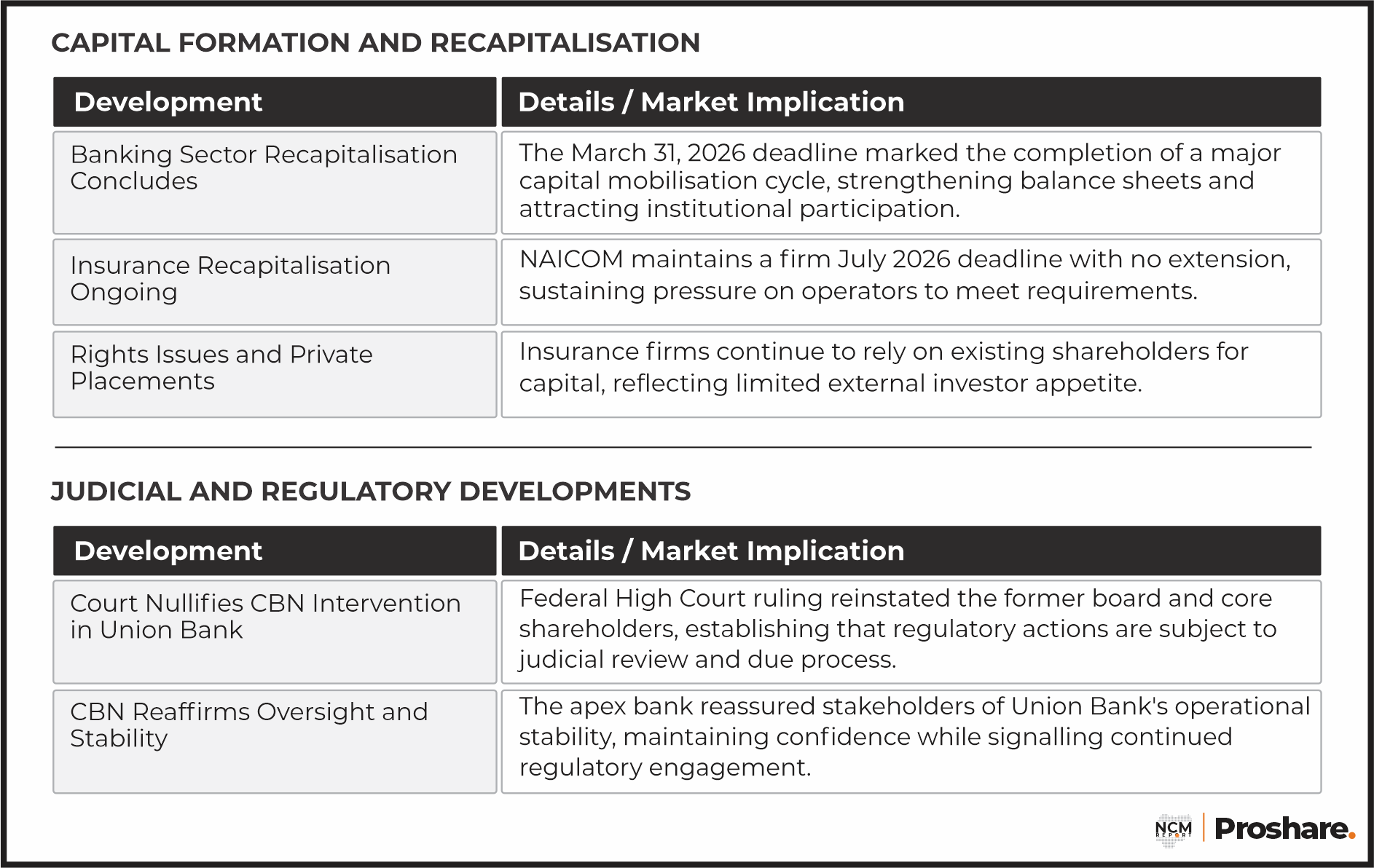
Capital formation remained central to market activity during the quarter, particularly within the banking sector, where the recapitalisation programme reached its regulatory deadline on March 31, 2026. This exercise resulted in substantial balance sheet strengthening and attracted a mix of domestic and foreign capital, contributing to the strong performance observed in banking-related indices earlier in the quarter. However, the moderation in banking stocks in March suggests a shift from capital raising to post-recapitalisation positioning. Also, the insurance sector recapitalisation remains ongoing, with a firm July 2026 deadline and no indication of an extension by the National Insurance Commission (NAICOM).
The sector continues to rely heavily on rights issues and private placements, with the transition from declared to verified capital introducing an additional layer of regulatory scrutiny that may shape final compliance outcomes. A Federal High Court ruling nullified the CBN’s January intervention in Union Bank, reinstating the former board and core shareholders, reaffirming the importance of judicial oversight in regulatory actions (see table below)
Financial Markets News
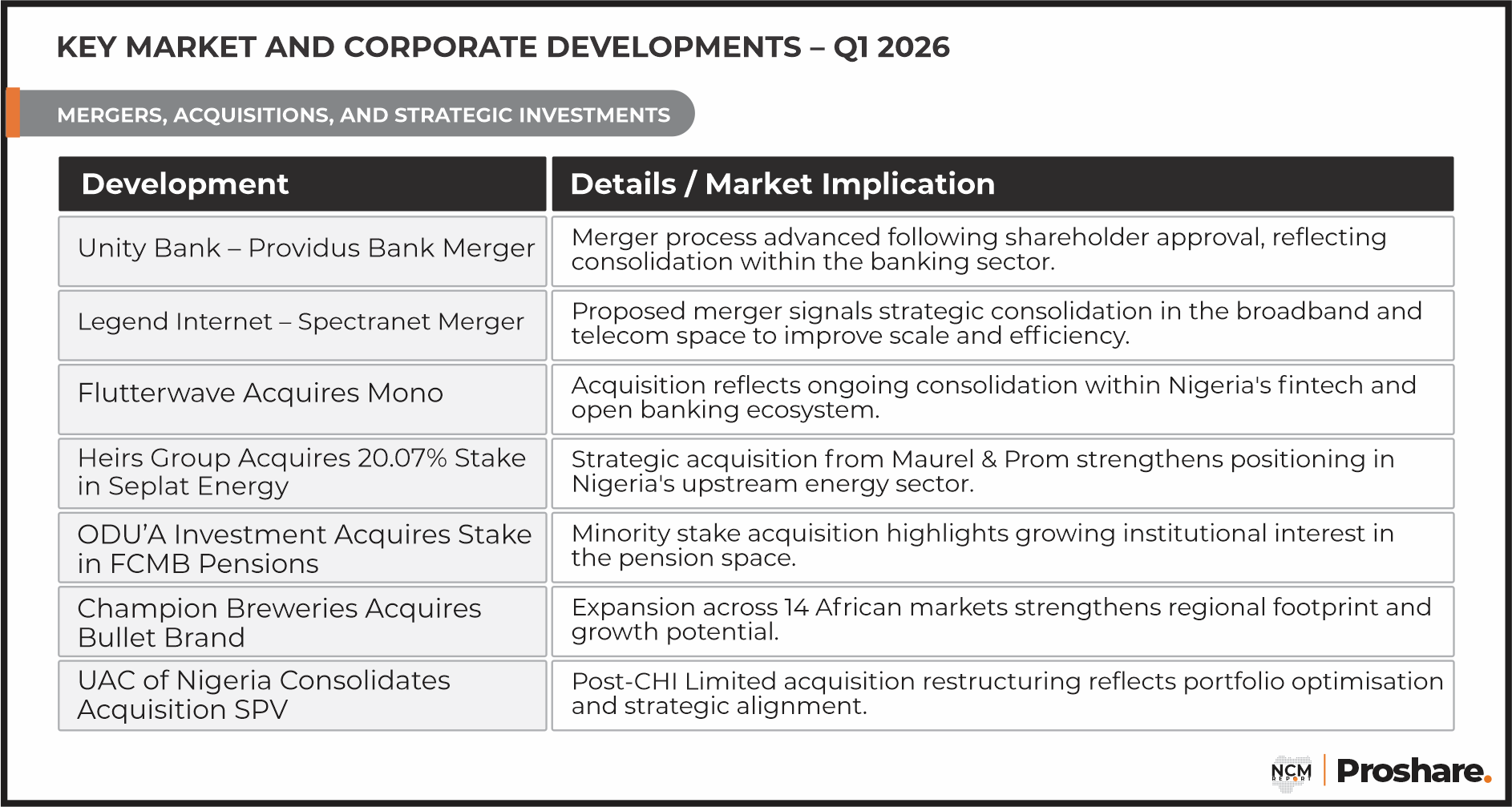
Corporate activity also contributed to market dynamics; in the first quarter of 2026, there was notable consolidation and strategic positioning across key sectors. The Unity Bank–Providus Bank merger progressed following shareholder approval, reinforcing consolidation in the banking sector.
In telecommunications, the proposed Legend Internet–Spectranet merger aims to enhance scale and operational efficiency. The fintech space saw Flutterwave acquire Mono, reflecting ongoing consolidation in open banking. Strategic stakes were also acquired in energy and pensions, with Heirs Group taking 20.07% in Seplat Energy and ODU’A Investment acquiring a minority stake in FCMB Pensions. Consumer goods and manufacturing saw Champion Breweries expand via the acquisition of Bullet Brand, and UAC of Nigeria optimise its portfolio post-SPV consolidation. Collectively, these deals signal a continued focus on scale, diversification, and regional expansion (see table below)
Analysts believe that market direction in Q2 will be the post-recapitalisation phase in the banking sector. With the capital-raising cycle now concluded, investor focus is expected to shift toward capital deployment efficiency and balance-sheet resilience, particularly as the Central Bank of Nigeria (CBN) commences stress testing. Outcomes from the process will be critical to determining investor confidence in banking-sector valuations and could trigger portfolio rebalancing.
In the insurance sector, the July 2026 recapitalisation deadline set by NAICOM remains a dominant theme. The continued reliance on rights issues and private placements suggests that secondary market liquidity may remain under pressure. Analysts expect to see mergers in the insurance industry in Q2 2026.
News
Additionally, expectations around a potential listing of the Dangote Refinery later in Q2 or Q3 present a significant upside catalyst that could deepen market capitalisation and attract foreign portfolio inflows.
NASD NSI Q1 2026 Performance Review
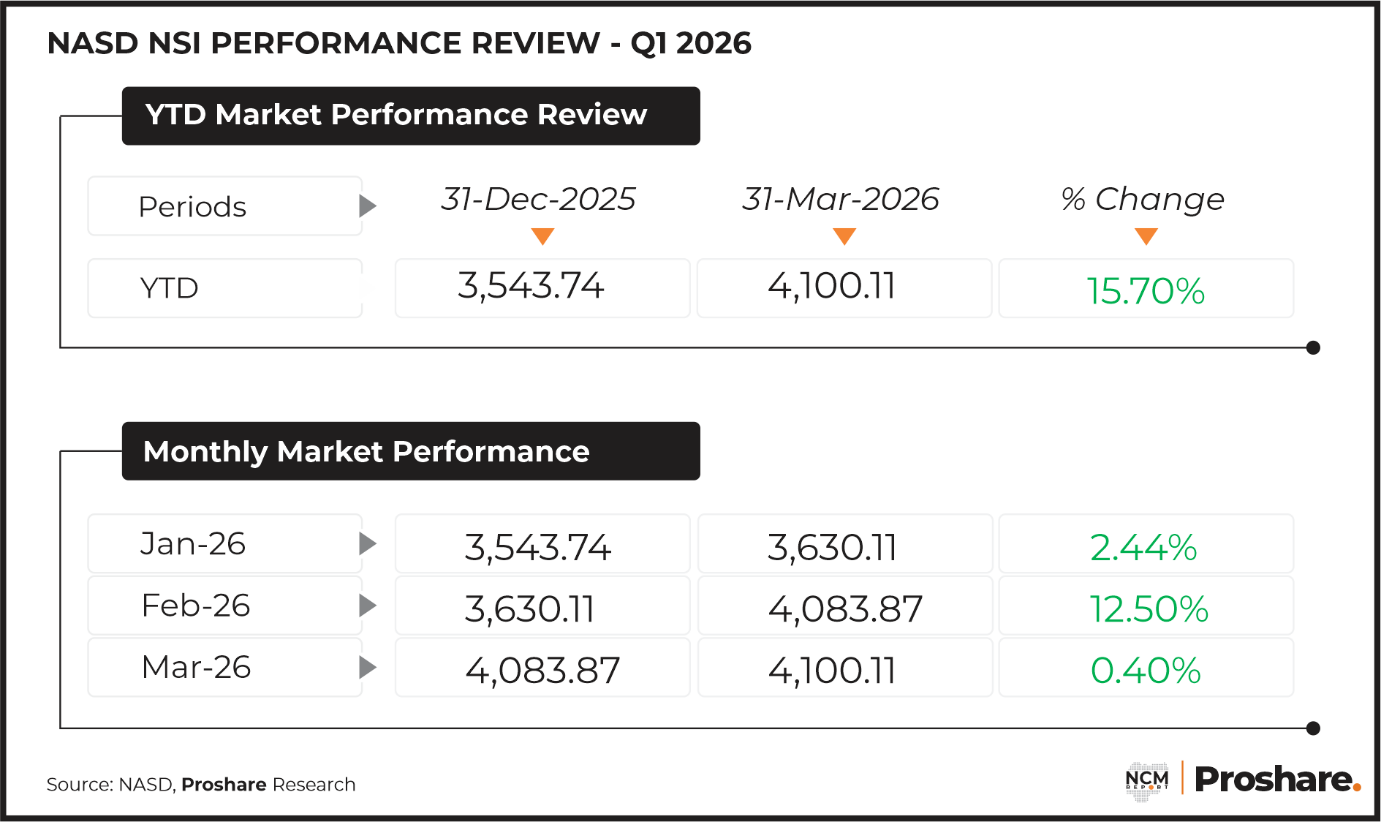
The NASD Security Index (NSI) started 2026 on a strong footing, closing Q1 at 4,100.11 index points, marking a 15.7% YTD gain from 3,543.74 index points at the end of 2025. January saw a modest 2.44% increase, followed by a robust 12.5% surge in February, reflecting heightened investor confidence and market activity. March moderated the momentum with a 0.4% gain, indicating stabilisation after February’s rally.
Analysts anticipate that the NSI will continue its positive trend into Q2 2026, though with more moderate gains than the sharp rally seen in Q1. The addition of new listings and greater adoption of alternative trading instruments will support modest upward movement in the NSI during Q2, even as short‑term volatility might emerge from broader economic factors and fluctuations in trading volume (see table below)
Capital Market Size by Exchange – Q1 2026
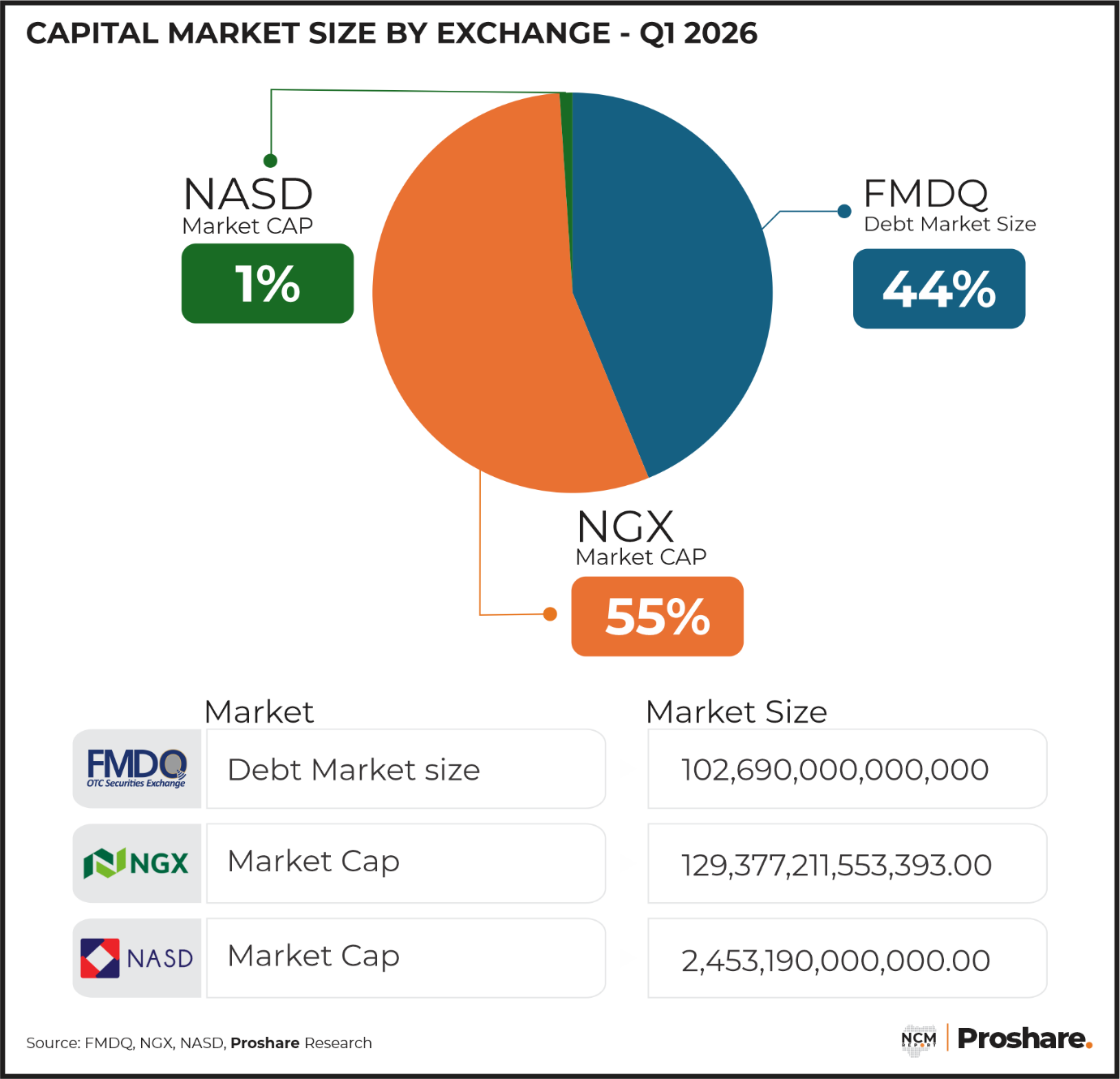
The Nigerian capital market recorded significant value across its key exchanges in Q1 2026. The Nigerian Exchange (NGX) continued to dominate with a market capitalisation of N129.38trn, representing 55% of the total market value. The FMDQ debt market accounted for N102.69trn (44%), while the NASD Exchange contributed N2.45trn (1%) to the overall market size.
Market analysts project that NGX’s market capitalisation could approach N200trn by Q2 2026, supported by increased listings, strategic market reforms, and sustained investor participation. With ongoing structural improvements and heightened regulatory oversight, the NGX is expected to maintain its leading role in driving capital market growth, positioning Nigeria’s financial markets for deeper liquidity and enhanced investment opportunities in the months ahead (see table below)
However, beyond the headline gains, Q1 showed that the market was undergoing recalibration. Regulatory enforcement actions, recapitalisation efforts, and governance reforms point to a system increasingly focused on transparency, resilience, and long-term stability. Equally, sectoral divergences and mixed analyst sentiment suggest that investors are becoming increasingly selective, with valuation discipline and earnings visibility now central to portfolio positioning.
Global economy trends
Looking ahead to Q2 2026, the outlook remains carefully optimistic. Market performance is expected to be driven by the completion of recapitalisation cycles, sustained earnings releases and dividend declarations, as well as potential new listings and strategic investments.
Analysts believe growth may slow gradually in Q2 compared to Q1 as investors navigate macroeconomic uncertainties, regulatory changes, and shifting market dynamics. The equities market is expected to continue its upward trend, supported by institutional strength, clear policies, and disciplined capital allocation, which will guide the next phase of development