N4.92 Trillion Outside Banks: Why Nigerians Are Clinging to Cash Despite CBN’s Cashless Drive

Cash held outside Nigeria’s banking system rose by N48.7 billion to N4.92 trillion in September 2026, according to latest Central Bank of Nigeria data. This represents a month-on-month increase of about 1% from N4.87 trillion in August, but more significantly a year-on-year increase of 10.3% from N4.47 trillion recorded in September 2025. While the September figure is below the over N5 trillion levels recorded in several months in the first half of 2026, when it peaked at N5.41 trillion in December 2025 and reached N5.19 trillion in May 2026, the renewed upward trend from N4.80 trillion in July and N4.87 trillion in August raises fundamental questions about the structure and behaviour of the Nigerian economy at a time when the CBN is pursuing a deliberate strategy to expand digital payments, deepen financial inclusion and reduce reliance on physical cash under its Nigeria Payment System Vision 2028.
The continued rise in cash outside banks is, first and foremost, an indicator of the resilience and dominance of the informal economy. Over 50% of Nigeria’s Gross Domestic Product is generated in the informal sector, where cash remains the language of trust and settlement. For traders in major markets, artisans, transport operators and rural farmers, cash is instant, final, does not attract charges and does not require network connectivity. The fact that cash outside banks has grown by nearly N450 billion in twelve months suggests that this informal economy is not shrinking, but expanding, and that economic activity within it is increasingly being settled outside the formal banking channel. This has serious implications for the state, as it means economic activity is not being captured for tax purposes, for GDP measurement accuracy, and for effective economic planning.
Secondly, the development points to a lingering trust and efficiency deficit in the formal banking channel. Nigerians have embraced digital payments rapidly, supported by fintech platforms, mobile money and instant payment systems, yet the experience of failed transactions, debit without credit, USSD downtimes and excessive bank charges continues to push many back to cash. When a POS transaction fails at a critical moment, the rational response of a market woman is to demand cash next time. The N4.92 trillion therefore represents not just cash, but a lack of confidence in the reliability of the alternative. It is a vote for certainty in an environment of uncertainty.
Thirdly, from a monetary policy perspective, the rise constitutes a leakage that weakens the CBN’s ability to manage inflation and liquidity. Effective monetary policy transmission works through the banking system. When the CBN raises the Monetary Policy Rate or increases Cash Reserve Ratio, it expects the effect to flow through bank deposits and credit. When nearly N5 trillion circulates outside that system, it continues to drive velocity of money and demand for goods and services in a way the central bank cannot directly mop up through Open Market Operations or other tools. This makes inflation control more difficult and dilutes the impact of tight monetary policy, especially food and core inflation driven by cash transactions in markets.
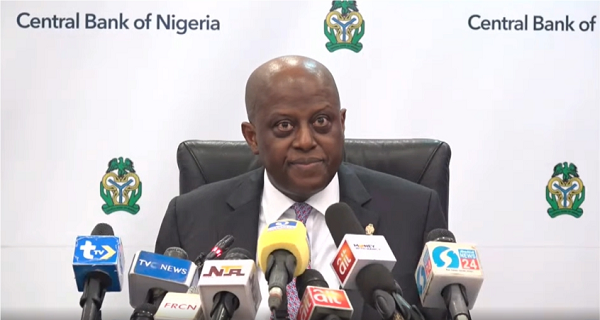
Fourthly, the figure casts doubt on the achievability of the CBN’s own targets under the Nigeria Payment System Vision 2028, launched by Governor Olayemi Cardoso, which seeks to reduce cash outside banks to below 40% of total currency in circulation and achieve 95% financial inclusion for adults by 2028. Financial inclusion is often measured by account ownership, but the real measure is usage. The data shows that while Nigerians may own accounts and wallets, they are choosing to keep a growing portion of their wealth in physical form. Reducing cash outside banks will therefore require more than building digital infrastructure; it will require making digital channels cheaper, more reliable and more beneficial than cash, and ensuring agent banking networks are adequately supplied with cash so they do not have to recycle cash outside the system to stay profitable.
Finally, it is important to interpret what the rise does not mean. It does not automatically mean that digital payments are declining. The volume and value of electronic transactions have continued to grow. What the economy is witnessing is a dual-track financial system where both digital and cash economies are expanding simultaneously. The formal, urban, younger and more tech-savvy population is going digital, while a parallel, largely informal, rural and market-based economy is also expanding its cash holdings. For policymakers, the challenge is not to demonize cash, but to understand that in Nigeria, cash remains king for a significant segment of the population, and any transition to a less-cash economy must be driven by trust, reliability and tangible incentives rather than by regulation alone.