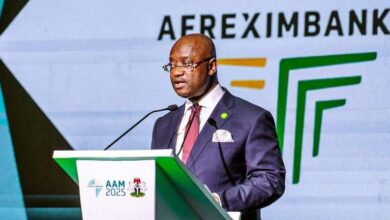
The Minister of Communications, Innovation and Digital Economy, Bosun Tijani, on Tuesday set a bold agenda for Nigeria’s digital future, declaring that the country must end its dependence on imported technology and begin building local solutions.
Speaking at the launch of the Artificial Intelligence University Innovation Pod (AI UniPod) at the University of Lagos, the minister made it clear that the initiative must deliver real impact and not become another symbolic project.
“Build, not import,” he charged, stressing that Nigeria must move from being a consumer of technology to a creator of globally competitive solutions.
He described the AI UniPod as more than a tech facility, calling it “a bridge to the future” that should drive innovation, research, and enterprise development across the country.
According to him, universities must evolve beyond their traditional roles and become active centres of problem-solving and productivity, with artificial intelligence playing a central role in national development.
The minister further challenged researchers and academics to expand the application of AI beyond business and start-ups, urging them to deploy it in advancing scientific discovery across sectors such as agriculture, healthcare, and climate science.
“Limiting AI to entrepreneurship alone does not do justice to its full potential,” he said, introducing the concept of AI for science as a key driver of innovation.
He linked the initiative to Nigeria’s broader ambition of ranking among the top 25 per cent of countries globally in digital and innovation performance, noting that progress made so far is the result of deliberate investments in policy, talent, and infrastructure.
However, he warned that achieving this goal will require sustained collaboration, calling on the private sector to invest in research and work closely with academic institutions.
“Do not wait for finished talent; help shape it,” he added, urging industry players to bring real-world challenges into innovation spaces such as the UniPod.
Meanwhile, the AI UniPod was formally launched by Vice-President Kashim Shettima, represented by the Deputy Chief of Staff to the President, Senator Ibrahim Hassan, alongside key stakeholders, including the UNDP Resident Representative in Nigeria, Ms Elsie Attafuah; Lagos State Commissioner for Science and Technology, Tunbosun Alake; and TETFund Executive Secretary, Sonny Echono.
In her remarks, Attafuah called for collective action to ensure the success of the initiative, urging stakeholders to invest, collaborate, and align efforts towards measurable impact.
“The success of this system will depend on the collective effort of all stakeholders,” she said, while encouraging young people to embrace creativity, curiosity, and commitment.
Also speaking, Echono emphasised the need to translate innovation into market-ready solutions, noting that Nigeria’s economic growth depends on empowering young minds to build sustainable industries.
“It is my conviction that Nigeria’s economic growth requires the translation of human inventions into market-ready solutions,” he said.
The Vice-Chancellor of the University of Lagos, Professor Folasade Ogunsola, described the initiative as a catalyst for national development, adding that artificial intelligence holds immense potential to enhance human capability, accelerate scientific discovery, and solve complex societal challenges.
The AI UniPod, equipped with cutting-edge facilities for AI, robotics, virtual reality, and prototyping, is expected to serve as a hub for developing scalable solutions and nurturing the next generation of innovators.
With strong policy direction from the minister and backing from government and development partners, stakeholders said the success of the initiative will depend on sustained commitment, funding, and collaboration.