It was meant to be a secret afternoon at a Gwarimpa guest house, one that would leave no trace. Instead, it ended with a corpse dumped under the Katampe Bridge and a trail of phone records that led police straight to a married woman who saved her lover’s number as “Safiyat.”
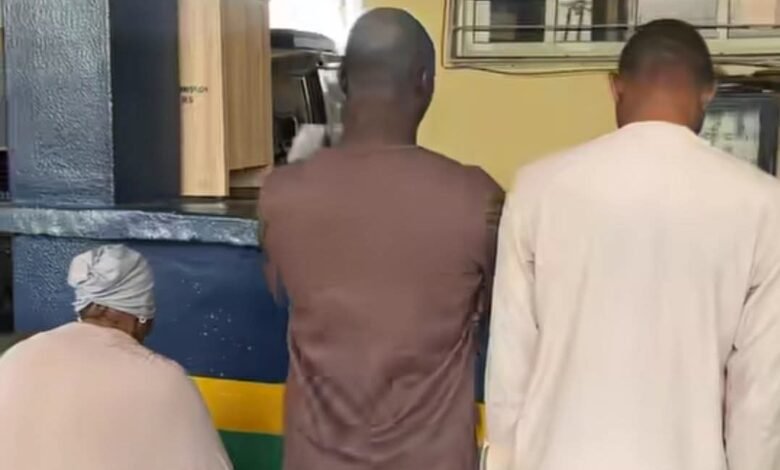
The FCT Police Command on Saturday, September 26, 2026, announced the arrest of Mrs. Rukayat Muhammed of Garki Area 2 and two staff of Good Samaritan Hotel, Ibrahim Omeiza and Kefat Bitrus, in connection with the lifeless body of a man discovered in August 2026 under the Katampe underpass along the Kubwa Expressway.
According to the Commissioner of Police, Ahmed Sanusi, Rukayat was in a romantic relationship with the deceased and deliberately saved his contact as a female name to conceal the affair. On or about August 27, 2026, the pair checked into Good Samaritan Hotel, also known as Good Samaritan Guest House on Second Avenue, Gwarimpa. During their time in the room, Rukayat discovered that her companion had died. Rather than alerting the hotel management, calling for medical assistance or reporting to the police, she took the deceased’s mobile phone and fled the hotel, leaving the body behind on the bed. That act of taking the phone, police said, immediately changed her status from a witness to a prime suspect, as it pointed to an attempt to erase evidence of their communication.
The second breach came from the hotel. After the pair failed to check out, Ibrahim Omeiza and Kefat Bitrus went to the room, knocked repeatedly without response, and forced the door open. They found the dead man. Instead of preserving the scene and notifying the police as required by law, the two staff removed the body from the hotel, transported it to the Katampe under-bridge along the Kubwa Expressway and dumped it by the roadside. By doing so, they destroyed a potential crime scene, tampered with forensic evidence, and exposed themselves to charges bordering on unlawful disposal of a corpse, conspiracy and obstruction of justice. Their action also raises serious questions about the management of the hotel and whether there is an unspoken practice in some hospitality outfits in Abuja to quietly dispose of dead bodies to avoid police scrutiny and bad publicity.
The case was cracked not by eyewitnesses but by a missing person complaint and phone forensics. After the deceased’s family reported him missing, detectives linked the unidentified body found under the bridge to the missing man and discovered that his phone was missing from the body. The missing phone became the critical lead. Although switched off, technical analysis traced the last communication on the deceased’s line to Rukayat Muhammed. Operatives tracked her to Garki Area 2, arrested her and recovered the phone. Confronted with call logs, she confessed to what happened in the hotel and led detectives back to Good Samaritan Guest House, where further interrogation revealed how the body was moved and dumped.
The police said the exact cause and circumstances of the death are still under investigation, pending autopsy and toxicology results. That determination is crucial because abandonment and panic do not automatically amount to homicide. The death could have resulted from natural causes, cardiac arrest or other medical factors. Until forensic results are out, Rukayat’s liability may range from failure to report a death and theft to more serious offences if foul play is established. For the two hotel staff, their deliberate removal and dumping of a corpse has already established clear criminal liability regardless of how the man died.
Beyond the salacious details of infidelity and a body under a bridge, the incident exposes regulatory gaps in the FCT hospitality sector and leaves a grieving family waiting for answers about how their loved one died in a hotel room and ended up dumped on a highway.