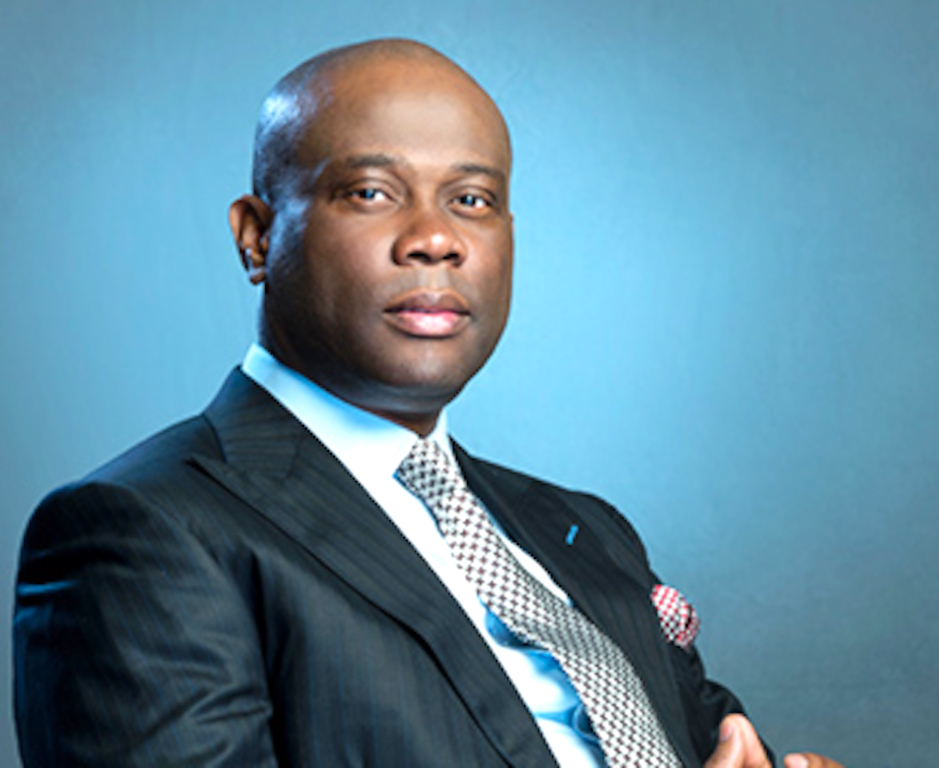
Herbert Wigwe died in February 2024 as one of Nigeria’s most celebrated bankers. Under his leadership Access Holdings grew from a mid-tier lender into West Africa’s largest banking group. But the public record of boardrooms and expansion announcements captured only part of the story. Corporate filings and property data across 20 countries show Wigwe held stakes in at least 80 companies, many of them in tax havens and shell structures that were not disclosed during his lifetime.
The scale is striking. In the UK, the Register of Overseas Entities revealed his links to over 100 London properties held through overseas entities. In Cyprus, the Isle of Man, Jersey, Mauritius, the US, and Nigeria, the network spans real estate, family offices, oil and gas, fintech, philanthropy, and financial market infrastructure. Entities like Tengen Holdings Mauritius, Coronation Trustees Tengen Mauritius, Deansleigh Holdings, Lodging Holding Ltd, and Beraug Investments LLC appear repeatedly, often alongside his business partner Aigboje Aig-Imoukhuede and family members. At Access Holdings, 1.26 billion of his 2.59 billion shares were held indirectly through Coronation Trustees Tengen Mauritius.
None of this is illegal by itself. Wealthy individuals routinely use offshore structures for estate planning, currency risk management, liability limitation, and cross-border investment. Jersey does not require public disclosure of ownership. Mauritius is a well-established hub for African investment holding. The structures enabled Wigwe to manage a complex, multi-jurisdictional business and to separate personal, family, and institutional interests.
The problem is opacity. Until the UK’s Economic Crime Act 2022 forced disclosure, the beneficial ownership of more than 100 London properties linked to Wigwe was effectively invisible. In other jurisdictions, co-owners and associated entities remain unidentified. For a banker running a systemically important institution, that gap matters. Banks depend on public confidence and regulatory trust. When a chief executive holds dozens of undisclosed entities across secrecy jurisdictions, it creates questions about conflicts of interest, related-party transactions, and the separation between personal wealth and institutional risk.
The record shows Wigwe’s interests were deeply intertwined with Access Holdings. His indirect holdings ran through entities that also sat inside the group’s structure. He sat on the boards of NG Clearing and other market infrastructure firms alongside competitors. He built fintech and payment platforms, real estate vehicles, and oil and gas interests in parallel with the bank. That is not unusual for a banker of his ambition. But it blurs the line between personal enterprise and institutional mandate. It also concentrates influence in ways that are hard to audit from the outside.
The family dispute after his death adds another layer. Shyngle Wigwe’s caveat at the probate registry and allegations about guardianship of children and assets point to unresolved questions about control and succession. When wealth is spread across 80 entities in 20 jurisdictions, succession becomes a legal and reputational risk for the bank itself.
The article does not allege criminality. There is no evidence in the report of laundering or illicit origin. What it does show is how much of Wigwe’s commercial universe operated out of public view, and how the opacity that was legal in 2015 has become harder to sustain after 2022. That is the point. In banking, perception matters as much as compliance. Capital adequacy, governance, and transparency are supposed to reassure depositors and regulators that the institution is distinct from the individual.
Herbert Wigwe’s legacy is a bank that scaled across Africa and a personal network that scaled across the world. The first is on the record. The second only became visible after his death. For regulators, investors, and the public, that gap between the visible bank and the invisible web is the real story. It raises a question that outlives him: in an era of global finance, how much opacity is too much for a systemically important banker?