
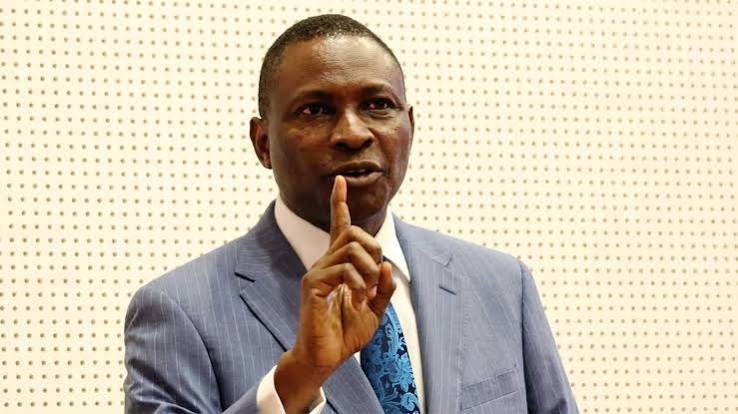
Olanipekun “Ola” Olukoyede was appointed Executive Chairman of the EFCC in October 2023. Almost three years later, the impression he has created is not of noise, but of work. The mandate was never about popularity. It was about restoring confidence in a system that Nigerians expect to be fair, firm, and focused.
A public office like this lives in people’s minds. What citizens have seen, heard, and felt about the Commission over time becomes its reputation. That reputation is built on three things: whether people know what you are doing, whether they believe you, and whether they feel the impact. By that measure, the last three years have been deliberate.
The brain behind the mandate is visible in the preparation that came into the job. A lawyer by training, a certified fraud examiner, and someone with compliance and international exposure, he had also served inside the EFCC before as Chief of Staff and Secretary. That meant he was not learning the institution on the job. He already knew where the gaps were.
That knowledge has translated into output. Since October 2023, the Commission has received more than 19,000 petitions, carried out over 29,000 investigations, filed more than 10,000 cases, and secured over 7,500 convictions. The recovery figures are also substantial: ₦566.3 billion, $411.5 million, and 1,502 assets. But the point is not just the numbers. It is what happened to them afterwards. 753 duplexes in Lokogoma were recovered and put to use. Nok University was converted into a federal university. ₦100 billion from recoveries went into student loans and consumer credit. Other funds were returned to NDDC, AMCON, FIRS, and NHIA. People can argue about policy, but they cannot argue that the assets disappeared into a black hole. That visibility matters. It tells citizens that enforcement has an end result they can touch.
The second element is heart, and here it means trust. No anti-graft agency survives without it. The quickest way to lose public confidence is for the house to be dirty. That is why the internal turn came first. The internal affairs unit was repositioned to focus on ethics and integrity. 55 officers were dismissed for misconduct, including one being prosecuted for tampering with exhibits. Asset declaration was made compulsory for all staff. Rules on gifts and hospitality were tightened. New directorates were opened in Ekiti, Anambra and Katsina. Plans for an EFCC Academy and a Cybercrime Research Centre were set in motion. These are not headlines. They are signals that standards apply inside before they are demanded outside.
Heart also shows in the shift toward prevention. Chasing criminals after the fact will never be enough. So a directorate was tasked to look at budget performance in MDAs, to spot leakages early and flag them. The claim is that this work helped in the delivery of over 80% of the Presidential CNG buses in 2024. Add to that EFCC Radio 97.3FM, national conversations on cybercrime, and the task force on Naira abuse. The message is consistent: stop the crime before it happens, and protect citizens before they become victims.
Then there is fire. Enforcement. In a country where impunity has become a habit, deterrence only works when people see consequences. High-profile prosecutions during this period included former governors, former ministers, and a former CBN Governor. In December 2024, 792 suspects were picked up in Lagos over investment and crypto fraud, with 192 foreigners prosecuted and deported. Partnerships were deepened with law enforcement agencies abroad, and regional cooperation was strengthened through leadership roles in West African anti-corruption networks. Fire does not mean recklessness. It means that status is not a shield, and that the law will be applied.
Put together, the picture is of a leader who approached the EFCC as both an institution and a public brand. Awareness was built through results, not press releases. Image was protected by cleaning up internally. Association was strengthened by linking recoveries to things that affect ordinary people — education, credit, public infrastructure.
Almost three years in, the real test is sustainability. Can the prevention work actually reduce leakages over time? Will recovered assets continue to be managed transparently and used for public good? Can discipline inside the Commission hold when the pressure increases? Those are the questions that will define the next phase.
Olukoyede did not come with slogans. He came with capacity. Brain to design systems and use data. Heart to insist on integrity and to remember that the victims of financial crime are real people. Fire to prosecute, recover, and act without waiting for permission.
That is the mandate he took in October 2023. And that is how it is being pursued now.