Governance Uncertainty Rocks Union Bank as Court Nullifies CBN’s Intervention

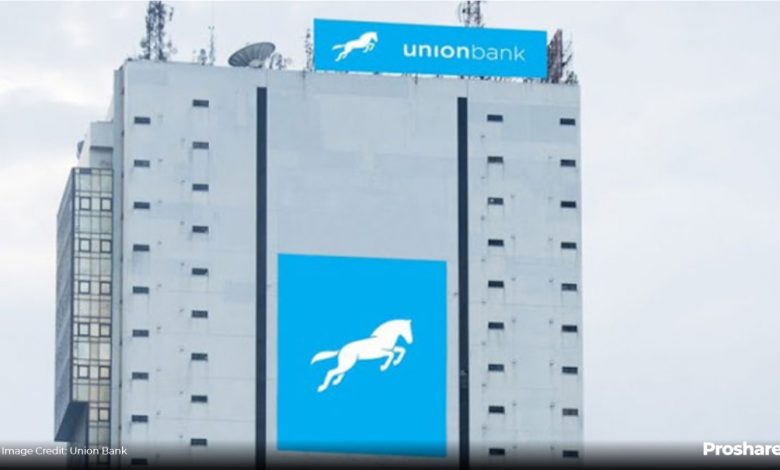
The Federal High Court’s landmark judgment nullifying the Central Bank of Nigeria’s (CBN) January 2024 intervention in Union Bank of Nigeria Plc has sent shockwaves through the banking sector, creating governance uncertainty and raising questions about the future of the bank. The court’s decision, which reinstates the former board and core shareholders, has significant implications for investors, regulators, and the broader banking sector.
The judgment, delivered by Justice Chukwujekwu Aneke, found that the CBN exceeded its statutory authority when it dissolved the board and management of Union Bank, citing non-compliance with the Banks and Other Financial Institutions Act (BOFIA) 2020. The court held that the CBN’s actions were ultra vires and non-compliant with the provisions of BOFIA 2020, and that the regulator’s powers of intervention are not insulated from judicial review .
The Central Bank of Nigeria’s (CBN) January 2024 intervention in Union Bank was part of a broader regulatory action involving three banks, citing non-compliance with the Banks and Other Financial Institutions Act (BOFIA) 2020. The CBN had raised concerns about Union Bank’s negative capital adequacy ratio, capital shortfall of over N224 billion, and high non-performing loan ratio .
The CBN has responded to the judgment, reaffirming its oversight mandate and assuring depositors and the public of Union Bank’s operational stability. The regulator has confirmed that it will continue to provide necessary regulatory oversight to ensure the bank operates safely and soundly ³.
The court’s judgment rested on two grounds: statutory authority and breach of fundamental rights. Justice Aneke held that the CBN’s actions did not conform to the procedures prescribed under BOFIA 2020, and that the regulator’s immunity provision does not apply where it acts outside its legal powers. The court also found that the core shareholders were sanctioned without a fair hearing, constituting evidence of bad faith ¹ ².
The CBN’s January 2024 intervention in Union Bank was part of a broader regulatory action against three banks, citing non-compliance with BOFIA 2020. The regulator had raised concerns about Union Bank’s capital adequacy ratio, capital shortfall, and non-performing loan ratio ¹.
The judgment does not resolve Union Bank’s underlying challenges, including its negative capital adequacy ratio and capital shortfall exceeding N224 billion. The restored board must now produce a credible recapitalisation plan that meets CBN’s prudential requirements. The CBN’s next steps, including potential appeal or supervisory monitoring, will shape the bank’s future .
The recent Federal High Court judgment nullifying the Central Bank of Nigeria’s (CBN) January 2024 intervention in Union Bank has created governance uncertainty. The court ruled that the CBN exceeded its statutory authority when it dissolved the bank’s board and management, citing non-compliance with the Banks and Other Financial Institutions Act (BOFIA) 2020 ¹ ² ³.
The CBN had appointed a new management team, led by Yetunde Oni, to oversee strategic changes, including recapitalization. However, the court deemed this action ultra vires and ordered the immediate reinstatement of the former board and management, led by Farouk Mohammed Gumel ¹ ².
The governance uncertainty stems from the CBN’s appeal and potential review of the judgment, which may impact Union Bank’s operations and recapitalization plans.