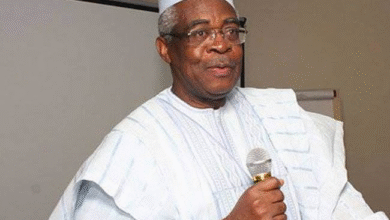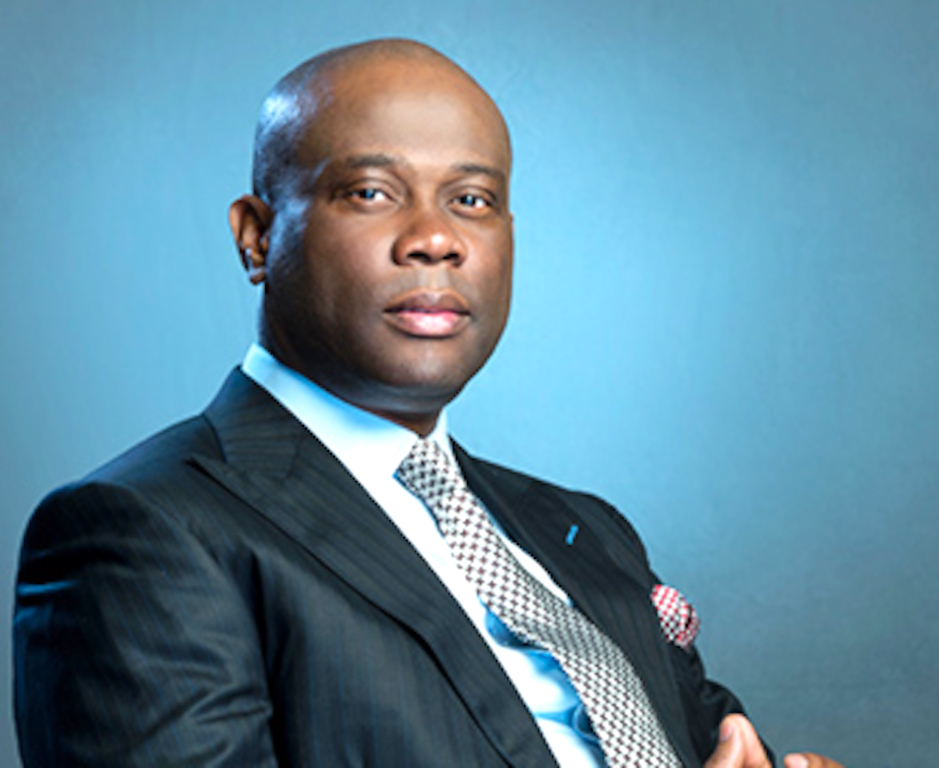
Tony Elumelu and Herbert Wigwe are etched in Nigeria’s banking history as two figures whose immense wealth sparked intense debate and controversy . Their impact on the industry is undeniable, but their rise to prominence has been shrouded in controversy.
Tony Elumelu is indeed a force to be reckoned with. As a Nigerian economist, banker, and philanthropist, he’s made significant waves in the corporate world, banking, and entrepreneurship. He’s the founder of The Tony Elumelu Foundation, which has empowered over 24,000 young African entrepreneurs and created a digital ecosystem of over 2.5 million Africans. His economic philosophy, Africapitalism, emphasizes the private sector’s role in transforming Africa. Elumelu’s impressive portfolio includes chairing Heirs Holdings, Transcorp, and United Bank for Africa, with investments in strategic sectors like financial services, hospitality, power, energy, and healthcare. He’s been recognized globally, including being named one of Time’s 100 Most Influential People in the World in 2020
Herbert Wigwe is a prominent figure in Nigeria’s financial sector, known for his leadership roles in Access Bank and other ventures. His career has been marked by significant achievements, including driving growth and innovation in banking .Herbert Wigwe’s net worth is estimated to be around $1 billion, primarily amassed through his successful banking career, particularly his leadership role at Access Bank, which he co-founded in 2002. Under his guidance, Access Bank grew to become one of Nigeria’s largest financial institutions, with operations across Africa and beyond. He also had investments in tech, energy, and real estate, including luxury properties in London, contributing to his significant wealth
However, their wealth has continued to spark intense debate: some view it as evidence of their diligence and intelligence, while others see it as a product of cunning or corrupt practices.
Chief Bode George hit the nail on the head when the stupendous wealth of Hurbert Wigwe was unveiled after his unfortunate death in a plane crash in America. Irked and dumfounded by the stupendous wealth of the former Managing Director of Access Holdings Wigwe who died a plane crash in AmericaChief Olabode George ,bared his fangs on Elumelu and the likes in the banking sector with similar dumfounding wealth. Olabode in a well trended video thundered : :who a hell is Elumelu? What did he do ? Where is his factory ? . He was a flopped bank man. Somehow he got a license at the same time with Fola Adeola . All of them are stupendously wealthy now . Wigwe who became the Managing Director of Access Holdings after that young man had left has now established a university; he had the temerity to be advertising that University on CNN. Wigwe University, personally established by him, where his his factory ?
What is the practice? , he added . “They realished dollars to them on monthly basis; they used the dollars .if is at 1 to 100 they will give it to the Mallams say 1 to 200 , you see that profit? That is what they used for nstead of given it to the commercial people for commercial activities. That is what they have done to this nation. They must all be invited for discussions becausethe the rootteness starts from that and it has been going on for years ; it has now explloded now on our faces .
Chief Bode George sparked intense debate with allegations against banking giants Tony Elumelu and the late Herbert Wigwe, claiming they had amassed billions through corrupt practices. He alleged they exploited dollar subsidies and engaged in forex arbitrage, harming Nigeria’s economy . George questioned the legitimacy of their wealth, pointing to their extravagant lifestyles, including private jets and luxury properties. George disputed Wigwe’s reputation as a “great banker”, suggesting his rise was facilitated by a corrupt system. He criticized Wigwe’s university and demanded accountability from Elumelu, wondering how a former bank staffer became a billionaire and UBA owner. These allegations sparked widespread discussion, with some backing George’s call for transparency. The debate highlighted concerns about Nigeria’s banking sector and economic inequality. While some defended the bankers’ achievements, others supported George’s push for scrutiny. The controversy raised questions about accountability and the source of wealth among Nigeria’s elite, leaving many wondering if justice would be served.
The controversy got heated up again after a magazine , . The Londoner, exposed Wgwe recently . “Ayo Onovo Agbo David wrote: ‘The dead cannot speak. But numbers can. And the numbers surrounding the late Herbert Wigwe, former Group CEO of Access Holdings Plc, are speaking with a thunder that no amount of posthumous hagiography can silence.’
A bombshell investigation by The Londoner, the British publication, has linked Wigwe to 106 properties in London, one of the most expensive real estate markets on earth. Based on newly released data compiled by Tax Policy Associates’ Dan Neidle, and made possible by a 2022 UK law compelling overseas entities to declare their beneficial owners, the report places Wigwe seventh among London’s biggest overseas property owners. He ranks above royals, industrialists, and foreign oligarchs.
The Londoner’s investigation linking Wigwe to 106 London properties, worth millions, has exposed the staggering scale of his wealth, hidden behind shell companies and offshore accounts . Critics argue this is a clear case of wealth laundering, with Wigwe facilitating the flow of illicit funds for Nigeria’s powerful. Wigwe’s rise to prominence was marked by controversy, earning him the nickname “King of Round Tripping” for his aggressive banking tactics. His acquisition of Intercontinental Bank and subsequent sacking of top Yoruba officials sparked accusations of tribalism. Now, his vast wealth and alleged financial opacity have reignited debates about Nigeria’s corrupt elite and their global enablers. The fact that Wigwe’s wealth was largely hidden from public view, using complex financial structures, underscores the need for greater transparency and accountability. As Nigeria grapples with economic hardship, Wigwe’s legacy serves as a stark reminder of the country’s entrenched corruption and inequality. The revelations have sparked calls for investigation and accountability, but many question whether justice will be served.
To those behind the above views, there is one common denominator that continues to raise doubt around the wealth of the two bankers: The genesis of their wealth which is believed to be directly linked to the success of both Access Bank and UBA , their cash cow . To some of them , his success in Crystal Bank is by mere luck, particularly with the controversy surrounding the sale and health of that bank when Elumelu and his team took over . In other words , the same Crystal Bank that he translated to STB which eventually announced him to the corporate world still stirred heated controversy against him . For instance, some people in the banking world alleged that there were not too ethical transactions in the acquisition of Crystal Bank. According to sources close to Crystal Bank, Elumelu and his team took over a cheaply valued bank ; though it remains an allegation till today , some analysts believed it was deliberate done to favour him .
As a matter of fact, there are instances and reports that showed that this opportunistic and hard-fighting group of young men led by Elumelu that took over the rested Crystal Bank bought deposits as low as between 30 kobo to N1. In 1998 , a year after the bank was taken over and was converted to Standard Trust Bank , STB , it surprisingly recorded a five-fold growth to further confirm this allegation .
Then , what is the magic? Some analysts, indeed, became restless . Reacting to the impressive performance of STB then , Victor Ogiemwonyin, CEO, Partnership Investments Co Ltd noted : “the five-fold growth can partly be explained, first because the old Crystal Bank which Standard Trust Bank took over was cheaply valued. In some cases they bought deposits at 30kobo to N1 –mainly because of the fear that Crystal Bank was going under .
He further explained that “Crystal Bank was an example of how short term liquidity problems was mis-interpreted for solvency problems by both the NDIC and CBN. If the CBN had taken on its role as the bank of last resort as the new CBN now realizes , we probably would not have had as many banks respond to the induced distress the way they did”. He alleged that “NDIC was definitely on a different mission, which had nothing to do with saving banks or depositors money”. However , despite this suspicion , Elumelu could not be pinned down to any crime or be held responsible for the alleged negligence of the regulatory authorities .Nevertheless , this is the reason why some critics of Elumelu believed he is just very lucky and not in anyway fantastic.
The acquisition of Intercontinental Bank by Access Bank has been shrouded in controversy, with allegations of corruption and collusion involving key players. According to reports, Sanusi Lamido Sanusi, then Governor of the Central Bank of Nigeria (CBN), played a crucial role in the takeover, allegedly working in tandem with Dr. Bukola Saraki, a powerful politician, and Herbert Wigwe, CEO of Access Bank 🌟. Sanusi’s swift move to declare Intercontinental Bank “non-performing” just two weeks into his tenure raised eyebrows, especially given the bank’s previously clean bill of health.The deal saw Access Bank, which was already indebted to Intercontinental Bank to the tune of N16 billion, acquire the bank for a paltry sum. The N50 billion purchase price was allegedly funded by the Bank of Industry, where Aig Imokhuede’s mother-in-law, Evelyn Oputu, was the CEO. The money was reportedly transferred to Intercontinental Bank’s account in the evening, only to be transferred back to the Bank of Industry immediately after the acquisition was announced. This brazen move has sparked accusations of money laundering and corruption.The CBN’s role in the acquisition has also come under scrutiny, with allegations that Sanusi Lamido Sanusi facilitated the deal to benefit his friend, Bukola Saraki, who had taken a N11 billion loan from Intercontinental Bank. The loan was allegedly written off by the new management, led by Lai Mahmoud Alabi, a Saraki loyalist. The entire episode has raised questions about the integrity of Nigeria’s banking sector and the complicity of its regulators.
However , to their admirers, both Tony Elumelu and Herbert Wigwe exemplified disruptive innovation in Nigeria’s financial sector. They were masters of associating, questioning, observing, networking, and experimenting, driving economic transformation in their own ways . Elumelu’s approach was rooted in his Africapitalism philosophy, empowering entrepreneurs and connecting ideas to investment opportunities through associating and networking. He challenged traditional development approaches by questioning the status quo. Wigwe’s leadership at Access Bank disrupted traditional banking by observing market gaps and experimenting with new solutions, expanding financial inclusion across Africa. Both leaders leveraged their networks and encouraged innovation, leaving an undeniable impact on Nigeria’s economy.
To some people , Tony Elumelu is a T shaped person with a depth in one area as well as breadth in lots ; he is a megamind that set for himself hubristic goals such as “putting a ding in the universe” .His capability for associating ,questioning, observing, networking and experimenting is what makes him unique .Of course , those are the habits of mind that characterize disruptive innovators.
His admirers believe he excels at connecting seemingly unconnected things, aided by his broadening experience ; he is known for constantly asking why things aren’t done differently , a taste that linked to a talent for observation ; he is a great networker and also an inveterate experimenter.
With the above traits , Elumelu could be compared to Marc Benioff that got the idea for Salesforce.com by looking at enterprise software through the prism of online businesses such as Amazon and eBay. ; David Neeleman, the founder of JetBlue and Azul, wondered why people treated airline tickets like cash, freaking out when they lose them, whereas customers could instead be given an electronic code ; Corey Wride that came up with the idea for Movie Mouth, a company that uses popular films to teach foreign languages; Michael Lazaridis, the founder of Research in Motion, that had the idea for the BlackBerry at a trade show, when someone told him how Coca-Cola machines used wireless technology to signal that they needed refilling and those who fiddle with both their products and their business models ; and like IKEA that never planned to base its business on self-assembly but discovered that the best way to get some furniture back into a lorry, after a photo-shoot, was to take its legs off, and a new business model was born.
From STB to UBA ,all his corporate entities are believed by his admirers to have the high “innovation premiums” and display the above five habits of mind an innovator . This may not be farfetched . Like a disruptive innovator,he works hard to recruit creative people and equally hard to stimulate observation and questioning.
His admirers believed Tony’s kinds are rare in the Nigerian banking industry just as the innovator’s DNA is rare. Of course , it may be difficult to dispute the above views . With a disruptive innovator DNA running through his veins , Tony gave life back to the dead Crystal Bank and turned it to Standard Trust Bank ,a bank with an unconventional business model that swallowed the old UBA , a banking behemoth ; he turned it to a brand with a tag of African global bank and a pillar of Nigerian economy.
He has remained a factor and a major player in the Nigerian banking sector since his days at Crystal Bank, a banking institution that shaped him and also announced him to the world. It was here at Crystal Bank that Elumelu’s charm and magic as a banker and as an organizer in a highly unpredictable business climate began.
At Crystal Bank, it will not be an overstatement to say that Elumelu actually squeezed water out of stone. But he did not stop at just squeezing water out of stone as he also did the inconceivable as a vibrant young man who was eager to succeed and make a name for himself. With his actions, he literally placed the banking world and Nigeria’s business community on notice.
To many people in the banking sector, Elumelu’s biggest achievement at the time was that he did not only resuscitate Crystal Bank, he also gave life to a dying bank that was on life support. Under Elumelu, UBA is believed to have gotten a new lease of life through branding, purposeful leadership and repositioning. Today, the bank is not only playing in the big league, it is also a pillar of the Nigerian economy .
Now , he reigns high in hospitality, insurance ,oil and gas apart from the banking .
Tony Elumelu is an exceptionally lucky man who has succeeded in almost everything he aimed for. He has also earned all his medals, and rightly so. That is why he is not called a financial whizz-kid for nothing by everyone, including those who may not like his tactics and style. This African billionaire and uncommon entrepreneur has made tremendous impact in the corporate world, banking, manufacturing, creating entrepreneurs, reviving and consolidating the gains of companies and above all, philanthropy.
Elumelu, the unusual economist and philanthropist has spent the last two decades empowering Africans, establishing thriving businesses and engendering hope around the world with his sterling performance as an Economist who uses data and statistical tools to interpret and forecast trends. This Chairman of Heirs Holdings, Transcorp Group, Pan-African Financial Services, United Bank for Africa, among other companies, was some days ago, inaugurated into President Ahmed Bola Tinubu’s Economic Team, a council with an interesting mix of government officials, top private sector players, entrepreneurs and technocrats.
This banker’s impact is also felt, even in the arts sector where he is making dreams come true with his interventions. Recently, Tony Elumelu Storytellers Fund called for applications from emerging artistes, journalists, content producers, podcasters and other people in the creative chain to take advantage of its grants to improve and expand their trade. According to the release, grants worth between $500 and $2000 will be awarded to each selected participant. For a businessman, looking in the direction of the arts is highly commendable and this must be stressed.
And, in spite of his many achievements, Elumelu still manages to acknowledge his infallibility and the fact that he is not a know-all individual who possess all the necessary talents needed to be an all-round successful man that he is today. According to him, his many successes came from his decision to always surround himself with talented individuals. “My weakness in some talents is the reason I surround myself with people who have talents I do not have,” he was quoted recently. Yes, he may have succeeded in addressing his weaknesses as a smart businessman
Most of his critics would not believe the tag of a disruptive innovator inscribed on him by his admirers as a critical factor behind his success and stupendous wealth .They perhaps find it difficult to align his past academic records with his present success ;their argument is that if Tony was not one of those considered or rated academically intelligent, how did he achieve his towering figure in the corporate world where deep intellectual base is imperative . And their reference point remains his class of degree at an equally relatively low rated Ambrose Ali University, Ekpoma in those days .
In fact , there is always a heated controversy over his class of his degree anytime his success becomes a subject of discussion .And his detractors are usually quick to point to this whenever they want to justify their belief that he is neither a genius or fantastic by any means . There are even some mischievous reporters who know that another way to exacerbate the situation and keep the Corporate Affairs Department of his bank perpetually on the receiving end is to mention his class of degree. It was gathered that his handlers are equally always quick to dismiss Ekpoma anytime there is a request for his academic laurels by journalists covering business and the economy. His media aides would rather send photos and information on the prestigious foreign institutions and business schools he attended abroad, a situation that usually compounds the suspicion that they have something to hide .
Many people, including his classmates and others in the corporate world insist that he made a Third Class Degree , though Elumelu and his handlers have refused to either agree or refute this position even as important as it is. For the above reason , this important banker, like his certificates and unusual activities, has remained a subject of speculation and controversies.
But not everyone is mischievous .Some either out of curiosity want to know whether with the high degree of intelligence displayed by Elumelu and success achieved by him it is feasible for him to have graduated with a Third Class Degree. The same curiosity took our reporter to Ambrose Ali University, Ekpoma which is his alma mater recently to ascertain the veracity of the claim of his critics . To our amazement ,many people in that school and the department of Economics as well as in the corporate world insisted that he made a Third Class Degree . In fact , some alleged he did not graduate at the normal time with his classmates . However , none of critics has shown us a copy of that degree for confirmation
But there is another angle that is reinforcing the suspicion . The fact that Elumelu is alleged to have distanced himself to that university , despite his deep pocket and philanthropic tendency is not making those who believed otherwise to dispute the story ; he is alleged to have neglected the schools that molded him and some stakeholders of those school s are not particularly happy with this . Today, the Economics Department at Ambrose Ali University, Ekpoma has no sign that a great banker and an important corporate player graduated from the institution.
As a matter of fact, there are some of his critics who may have decided to take an extreme view on this matter for reasons that may be personal. To this group of people, the man is simply sad and unhappy even in the midst of affluence, deep pocket, philanthropy, influence and a great life that should be the envy of many people. Some people observed this might not be unconnected with his alleged ugly experience at Ambrose Ali University, Ekpoma . To those with this observation , it appears he has no emotional attachment to that school. Elumelu attended his primary, post primary and tertiary institutions in both Delta and Edo states. But the top banker is always allegedly become disheveled anytime anyone mentions Ambrose Ali University, Ekpoma which is his alma mater.
But why are his critics so interested in his personal and private affairs ? After all the world is littered with influential and highly successful individuals that are drop out from their schools . By our own speculation , the key reason is that some of these people either believed Elumelu is just lucky or not too clean ; it could also be out of pure jealousy .. EVen ,if he had a third class , to us Tony has proved to the younger generations of graduates that first class degree is not all they need to succeed while third class is not an end of the road to success in life .
The controversy on Elumelu is not limited to the issue of his class of degree . The above observation by his critics is corroborated by the less inspiring state Elumelu left UBA when he and others were forced to step down by CBN . He left in 2010 and the bank’s profit after tax fell below N1biion at 598m against N2.4 b 2009 ,N40.8b 2008 and N21 b in 2007 .
The most controversial tissue was the bank’s 2011 results as it recorded a loss of N8.7b . a year after left the bank as GMD .Then what makes Elumelu a genius , when a bank’s fortunes under his watch cascaded ? . Although some attributed UBA’s uninspiring performance to the global financial crisis of 2007–08, despite this ugly circumstance, some corporate leaders were not so badly hit as UBA in the last few years of Elumelu as GMD of UBA. .
The huge loss that hit UBA in 2011 and the subsequent venture of Elumelu in virtually all other sectors of the economy after he was removed raised suspicion over his stupendous wealth and the less impressive performance of UBA since he left the position of GMD .
More so, this is mostly attributed to bad loans. Were these bad loans artificially created as some leadership of some banks in the past were suspected to be doing in those days of repeated banking sector collapse ? This remains a speculation and a suspicion that needed facts and figures . But there is none yet .
Till today UBA has been overtaken by its rivals in profits and other performance indicators and its shareholders remain at the receiving end while its top management staff members are living in affluence at their expense . Ironically , Elumelu turns himself a philanthropist . Is this not a contradiction?
None of those who invested their hard earned earnings in its 2007 initial Public Offer and right issues under his leadership of the bank would forget in a hurry the huge misfortune that befell them . United Bank for Africa, Nigeria’s biggest bank then , created excitements in the capital market with the launch of its N54 billion hybrid offer. It remains a disastrous decision till today for those who bought its share at N34 per share . Since then the price of UBA’s stock per share failed to hit close to that peak for years until 2023 when this jinx was broken . The stock bought at that price was selling below N8.00 per share for years . The ugly scenario above be the reason why Bode George was annoyed with the likes of Elumelu in a well trended video .
The heated controversy that came from Elumelu’s friend and business associate , Femi Otedola is another not too impressive signal about him that stirred heated controversy against him . This controversy borders on backstabbing and irregularities in Transcorp where he holds sway as Chairman. Unfortunately, these controversies pitched him against Femi Otedola, his friend over their individual stakes at Transcorp. For those in Otedola’s camp, Elumelu betrayed his friend when he misled him with regard to Otedola’s business decisions and takeovers , leading to a power struggle at Transcorp on account of Otedola’s acquisition of 5.52 per cent stake in the company’s shares.
This naturally, positioned Otedola on the path of take over as the second-largest investor. But Elumelu allegedly quickly moved in to neutralize Otedola in order to make the injection of his N250 billion inconsequential in the final analysis.
Aside other accusations, there is a strong belief by sympathizers of Otedola that Elumelu, the master of business games, took his shares in UBA and African Finance Corporation to service the interest on his loans when he went bankrupt about 15 years ago. Elumelu also came under Otedola’s hammer for an outstanding disagreement some years ago. According to Otedola, Elumelu actually bought secret shares from Trancorp to acquire Ughelli Power Plant even after he had informed Elumelu of his interest and a pending investment in the plant. However , one thing is that the argument is neither here nor there .