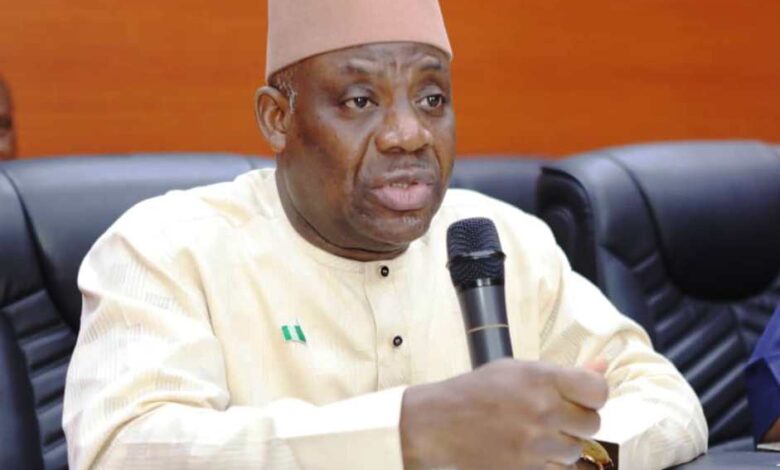
In government, intent and impact are rarely the same. A policy can be correct on paper and still fail in the real world because of how and when it is delivered. That is the dilemma now facing Dr. Maruf Tunji Alausa, Nigeria’s Minister of Education. He came into office with the profile of a reform-minded technocrat, promising to align Nigeria’s education system with the realities of the economy. The ideas he has pushed — reviewing outdated courses, making national exams sustainable, reducing structural inefficiencies like the JSS-SSS separation — are not wrong. The problem is in the execution, the timing, and the tone.
The first major test came in June 2026 with the proposed review of WAEC and NECO registration fees. The Ministry’s argument was straightforward and factual. The costs of running credible national exams have climbed for years. Logistics, security, printing, technology, and quality assurance are all more expensive in 2026 than they were in 2019, yet exam fees have remained largely unchanged. No examination body can survive indefinitely on an outdated funding model. But governance is not only about arithmetic. This was a period when Nigerian households were already stretched thin by fuel subsidy removal, persistent inflation, and rising school levies. To send out a formal letter proposing higher fees, without prior consultation or visible cushioning, was to misread the mood of the country. It sounded like a cost-recovery memo rather than a policy from a government that claims “welfare of students and equitable access” as a pillar of the Renewed Hope Agenda. The contradiction became even sharper when, just days earlier, the same Ministry had announced plans to phase out the JSS-SSS separation to keep more children in school and reduce dropouts. One policy was pulling students in, while the other was pushing them out through higher costs. After strong public backlash, the Federal Government did the right thing by suspending the hike and withdrawing the letter. But the damage to trust was already done. A minister’s job is to anticipate that backlash before the memo leaves the desk, and to sequence difficult decisions with empathy, communication, and alternatives.
The second controversy came in April at the “Renewed Hope Conversations” in the University of Abuja. Speaking to students, Dr. Alausa said the government was training young people to be entrepreneurs, not job seekers, and added that many social science courses had “no jobs for you in the future.” He also disclosed plans to discontinue academic programs with “limited employment prospects.” The frustration behind the statement is understandable. Nigeria’s unemployment and underemployment crisis cuts across disciplines, and over 90% of jobs are in the informal sector. But telling students who have invested their last savings in a degree that their field is worthless is not policy. It is a verdict. Academics, labour experts, and student groups pushed back immediately. They argued that the problem is not the discipline but the environment. Employers need critical thinkers, communicators, policy analysts, and people who can interpret data for communities, regulators, and markets. That is exactly what social sciences train. What is missing are modern labs, industry partnerships, curriculum reform, and an economy that can absorb graduates across fields. To suggest that only STEM matters ignores how societies and businesses actually function. Even NANS, which supported the idea of aligning education with work, warned that the Minister’s language was too harsh given the weight of his office.
The third issue is about transparency. In May 2024, a staff crisis erupted at the Federal College of Education (Technical), Akoka. The Minister inaugurated a Special Visitation Panel in July 2025, and the panel submitted its report. In March 2026, human rights lawyer Ayodele Ademiluyi filed an FOI request for the report. There was no response within the statutory seven days, leading to a lawsuit at the Federal High Court in Lagos to compel its release. In a sector already battling perceptions of secrecy, silence reads as concealment. Even if the report contains sensitive personnel matters, the law allows for redaction or summary. Withholding it entirely feeds suspicion and undermines the very accountability the Ministry demands from institutions. The same season also saw the Ministry summon the VC of FUTO over alleged irregularities in mass appointments. That was proper oversight. But coming alongside the other two episodes, it created the impression of a Ministry that is quick to police others while struggling with its own public communication.
What connects these three episodes is not incompetence. Dr. Alausa is an accomplished professional, and the Ministry has introduced forward-looking ideas this year. The problem is one of fit. Reform in Nigeria’s education sector requires more than technical solutions. It requires reading the room, bringing stakeholders along, and protecting the hope of millions of families who see education as their only ladder. The WAEC proposal showed a gap in political timing. The social science comment showed a gap in empathy and nuance. The Akoka case showed a gap in transparency.
The Federal Government has demonstrated that it can listen, as seen in the reversal of the exam fee hike. That responsiveness must now become the default mode of operation at the Ministry. WAEC and NECO do need sustainable funding, but the conversation should start with protecting the poorest student first. Can states co-fund? Can corporate partners sponsor? Can technology reduce printing and logistics costs before parents’ pockets are touched? On employability, Nigeria does not need fewer thinkers or communicators. It needs more jobs and better training that makes every discipline relevant. On governance, public documents belong to the public that funds them, and transparency should be a habit, not something extracted by a court order.
So is Dr. Alausa a square peg in a round hole? The answer depends on what happens next. The ideas are necessary, but ideas alone do not govern. In a democracy, how you reform matters just as much as what you reform. If the Ministry can marry its technocratic drive with political intelligence, empathy, and openness, the current controversies can become a turning point. If not, good policies will continue to die not on merit, but on tone.