African Export-Import Bank (Afreximbank) has approved a $10 billion Gulf Crisis Response Programme (GCRP) to protect African and Caribbean economies, financial institutions and corporates from the deepening economic shocks triggered by the escalating conflict in the Middle East.
The conflict, which intensified on February 28, 2026, has sent ripples across the global economy, with Africa and the Caribbean economies (CARICOM) among the hardest hit due to their dependence on imports of fuel, fertiliser and food, as well as exposure to critical shipping routes such as the Strait of Hormuz. Disruptions to investment flows, tourism and remittances have further compounded the strain on vulnerable economies.
The GCRP is structured to provide immediate support by sustaining essential imports through short-term foreign exchange liquidity, while also enabling African energy and minerals exporters to leverage higher global prices and shifting trade routes. The programme will extend relief to countries impacted by disruptions in tourism and aviation, while also supporting the scaling of productive capacity and fast-tracking critical infrastructure projects across energy, ports and logistics.
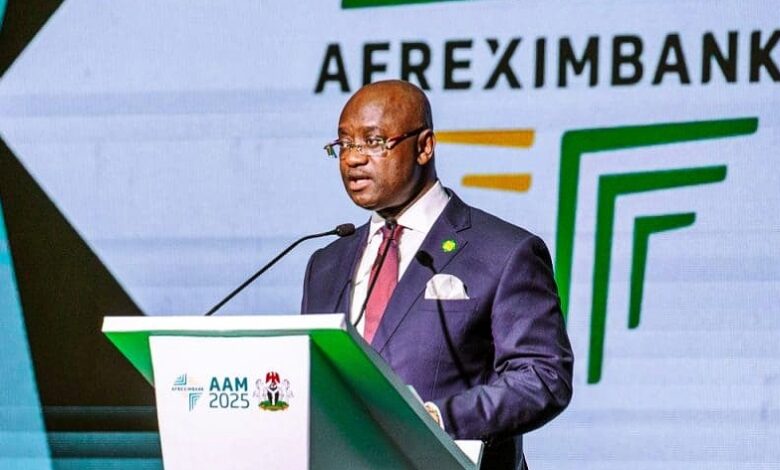
Speaking on the initiative launched on March 31, 2026, President and Chairman of the Board of Afreximbank, Dr George Elombi, said the intervention reflects the bank’s commitment to helping member states navigate external shocks while strengthening long-term economic resilience.
The programme builds on Afreximbank’s track record of crisis interventions, including support during the 2015–2016 commodity downturn, the COVID-19 pandemic, and the Ukraine crisis, where it deployed large-scale financing to stabilise economies and maintain access to essential goods.
Under the new facility, the bank has begun working with financial institutions and corporates to secure energy supplies, fertilisers and food imports disrupted by the crisis.
It will also coordinate a broader regional response in partnership with the United Nations Economic Commission for Africa, the African Union Commission, the African Continental Free Trade Area Secretariat and the Caribbean Community to strengthen energy security, trade resilience and supply chain diversification across affected regions. Adapted from the Guardian