

Two months after its board signed off on its half-year accounts, Access Holdings Plc still has not published them, and the prolonged silence is now a bigger market story than the numbers themselves will be.
On August 27, 2026, the board approved the Group’s Audited Interim Financial Statements for the period ended June 30, 2026, subject to Central Bank of Nigeria approval. By August 28, the company was in a closed period that remains in force today. That delay was supposed to be procedural. It has turned into a credibility and pricing issue.
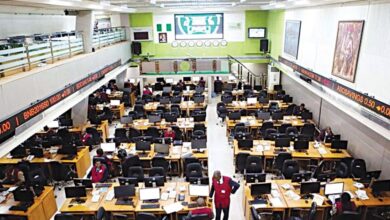
The immediate implication is valuation pressure. On October 21, ACCESSCORP fell 6.12%, leading the banking sell-off that dragged the NGX Banking Index down 1.49% and wiped N515.95 billion off total market capitalization. When a tier-one holding company trades without audited H1 numbers in late October, investors do not wait patiently, they derisk. The stock is now carrying a regulatory overhang that GTCO, Zenith and FirstHoldCo are not, forcing portfolio managers to model Access on stale Q1 data while peers have moved on to Q3 outlooks and dividend expectations.
The second implication is informational asymmetry. Q1 2026 presented a mixed picture: profit before tax rose, but net interest income declined, impairment charges jumped sharply and operating expenses increased. The half-year audited accounts were meant to answer whether that was a one-off or a trend in asset quality and cost efficiency as the group scales its payments, insurance and pan-African banking operations. Without that anchor, every rumour about provisioning, capital adequacy or expansion cost lands harder, and market breadth suffers, as seen on October 21 with 42 decliners against 23 gainers.
The third implication is governance signaling. The extended closed period since late August means no director, senior executive or connected person can trade the stock. That removes the most powerful confidence signal in a downturn. Foreign portfolio investors, who rely heavily on timely IFRS audited statements for their models, tend to apply a discount for late filers. The longer the delay, the higher that discount, regardless of the eventual numbers.
All of this is happening not because the board did not act, but because the regulatory chain has not concluded. Company Secretary Sunday Ekwochi’s filing was clear that publication would follow CBN approval, and the October 2 filing for a fresh extension after missing the September 30 deadline stressed that the accounts had not been rejected, merely still under review. The pattern, however, is recurring. The group faced similar delays with its H1 2025 and FY2025 audited results, which shifts the question from whether the CBN is slow to whether Access Holdings’ own consolidation and audit readiness for a complex HoldCo structure is aligned with the NGX’s 60-day window for interim audits.
To be clear, regulatory approval and financial integrity are distinct issues and there is no evidence of irregularity in the accounts. But in equity markets, timing is a governance metric. Extensions are designed to protect investors from incomplete information, not to normalize late filing. Access has stated its commitment to strong governance and transparent engagement, and compliance with CBN review is part of that. Yet transparency also requires a predictable calendar, especially when the bank is selling a value-focused strategy that hinges on proving capital allocation and balance sheet efficiency.
Until the CBN grants clearance, Access Holdings will continue to trade blind, with its share price reflecting uncertainty rather than performance. That is a market position cost that even a strong H1 result will struggle to fully reverse.